+1 (561) 295-3504


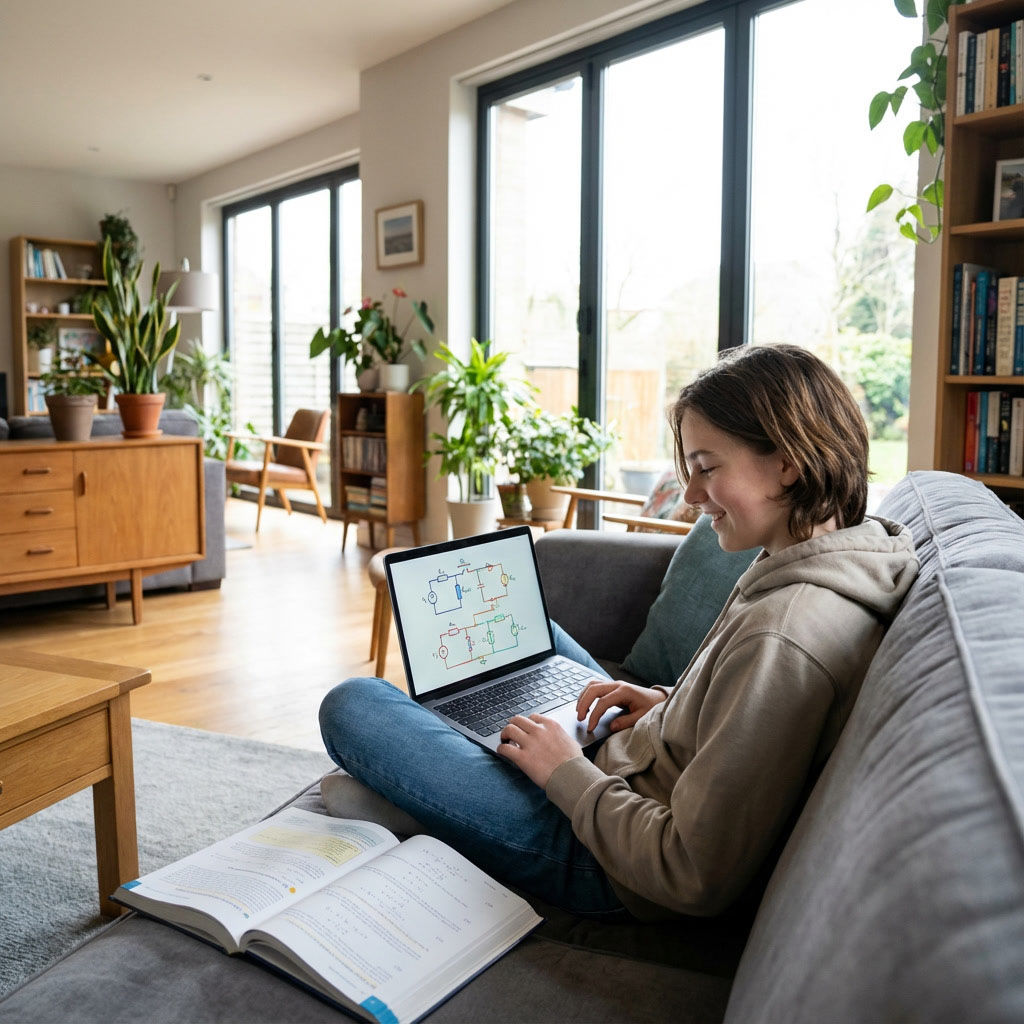
The best online middle school programs share a few non-negotiable qualities: regional accreditation from organizations like Cognia or SACS CASI, small class sizes with actual teacher interaction, and curriculum rigorous enough to prepare students for high school.
Beyond those basics, the "best" program really depends on your kid and your family's situation. A traveling family needs something different than a family with a fixed routine.
A self-motivated learner thrives in a different environment than a student who needs more structure and accountability.
So how do you sort through all the options and figure out what actually works? Let's break it down.
Here's the thing about middle school: it's awkward. Not just socially, but structurally. You've got kids ranging from 11 to 14, all going through wildly different developmental stages, crammed into the same rigid schedule. Some students sail through. Others struggle, and it has nothing to do with intelligence.
The National Center for Education Statistics has tracked steady growth in virtual course enrollment over the past decade, with middle school families increasingly looking for alternatives. The reasons are all over the map. Some parents have kids who are miserable in traditional school environments. Others have scheduling conflicts with sports, performing arts, or family travel. And plenty of families simply want more say in how and when their child learns.
None of these reasons are wrong. But they do mean you need to be thoughtful about which program you choose, because quality varies dramatically.
I know accreditation sounds boring and bureaucratic. It's also the single most important factor in your decision, so stick with me here.
When a school holds regional accreditation from a recognized body like Cognia or SACS CASI, it means an independent organization has verified that the school meets real educational standards. This matters for practical reasons. Credits transfer properly if your child switches schools. High schools accept the coursework without hassle. Down the road, colleges recognize the transcripts.
Without proper accreditation, you could end up in a frustrating situation where your child's coursework doesn't count for what you thought it would. It happens more often than you'd think, and it's completely avoidable if you check credentials upfront.
Let's clear up a misconception. Online school doesn't mean your kid watches videos alone in their room all day and occasionally submits a worksheet. At least, it shouldn't.
The better online middle school programs include live classes where students interact with teachers and classmates in real time. There are discussions, group projects, and actual back-and-forth with instructors who know your child's name. Outside of live sessions, students work through assignments and readings at their own pace, but they're not abandoned to figure everything out alone.
The balance between live instruction and independent work varies by program. Some lean heavily toward scheduled classes. Others offer more flexibility. Neither approach is inherently better. It depends on what your kid needs.
This one's easy to overlook, but it makes a huge difference. A teacher managing 150 students cannot provide the same feedback and attention as a teacher working with 15. The math just doesn't work.
When you're evaluating programs, ask directly: how many students are in a typical class? How do teachers interact with students outside of live sessions? What's the turnaround time on questions and feedback?
Middle schoolers still need significant guidance. They're learning how to manage their time, organize their work, and advocate for themselves when they're confused. A program with genuine teacher support makes that transition much smoother.
Middle school spans three years, and each one serves a different purpose.
Sixth grade is the bridge year. Kids are moving from the hand-holding of elementary school toward more independence, and most of them aren't quite ready for it. Good programs provide structure while gradually building the skills students need to manage themselves. Academically, expect foundational work in language arts, math building toward pre-algebra, introductory science, and social studies covering world geography and ancient civilizations.
Seventh grade ramps up expectations. Writing assignments get longer and more complex. Math moves into pre-algebra or early algebra territory. Science involves more inquiry and critical thinking. This is also a good year for students to explore electives, whether that's a world language, coding, digital arts, or something else that sparks their interest.
Eighth grade is high school prep. By the end of this year, students should have the academic foundation and study habits they need for more demanding coursework. Strong programs treat eighth grade as a launching pad, not a holding pattern.
Will your kid have friends if they do online school? It's the question every parent wonders about, even if they don't ask it out loud.
The honest answer: it depends on what you do with it. Online school removes the automatic social exposure of a physical campus. But it doesn't eliminate socialization. It just changes how it happens.
Quality programs build in group projects, discussion forums, and virtual clubs where students connect over shared interests. For some kids, especially those who find large social settings overwhelming, these smaller interactions actually work better than navigating a chaotic cafeteria.
That said, you'll want to think about social opportunities outside of school. Sports leagues, community groups, hobby clubs, religious organizations. These connections matter, and they require some intentionality when school isn't providing the built-in social structure.
Don't just read the website and hope for the best. Get specific answers to these questions:
What accreditation does the school hold, and can you verify it independently?
How are classes delivered? What's the mix of live instruction versus self-paced work?
What's the average class size, and how accessible are teachers?
What happens when a student struggles with material? What support systems exist?
How do parents stay informed about progress without having to micromanage?
What technology and equipment does the school require?
Taking the time to ask these questions upfront saves headaches later. Admissions staff at reputable programs will answer them directly. If you get vague responses or pushback, that tells you something.
The best online middle school for your family isn't necessarily the one with the fanciest website or the longest list of course offerings. It's the one that matches what your kid actually needs.
Start with accreditation. That's non-negotiable. From there, think about your child's learning style, your family's schedule, and what kind of support your student requires. A highly self-motivated kid might thrive with more flexibility. A student who needs external structure might do better with a more scheduled approach.
When the program fits the student, online middle school works. When it doesn't, it's a struggle for everyone. Do the research now, and you'll save yourself and your child a lot of frustration.
What is the best online middle school?
The best online middle school is one that holds regional accreditation, offers small class sizes with dedicated teacher support, and matches your child's learning style and your family's needs. Programs accredited by Cognia or SACS CASI meet recognized educational standards and provide transcripts accepted by high schools and colleges.
Are online middle schools accredited?
Some are and some aren't, which is why checking accreditation status is critical before enrolling. Look for regional accreditation from organizations like Cognia, SACS CASI, or similar recognized bodies. Accreditation ensures credits transfer properly and coursework is recognized by other institutions.
How many hours a day is online middle school?
Most online middle school programs require between 4 and 6 hours of work per day, though this varies by program and student. Some of that time involves live classes with teachers, while the rest is independent work on assignments, readings, and projects.
Can online middle school prepare students for high school?
Yes, provided you choose an accredited program with rigorous curriculum. Quality online middle schools cover the same core subjects as traditional schools and build the study habits and academic skills students need for high school success.
Is online school good for middle schoolers?
Online school can be excellent for middle schoolers when the program and the student are well matched. Students who need flexibility, thrive in quieter environments, or struggle with traditional school settings often do well with online education. Students who need significant external structure may require a program with more scheduled classes and accountability systems.
How do online middle school students socialize?
Students in online middle school socialize through virtual clubs, group projects, discussion forums, and live class interactions. Families typically supplement this with outside activities like sports leagues, community groups, and hobby clubs to ensure well-rounded social development.
Online elementary school in Arizona: accredited options, how the universal ESA helps pay tuition, and what to look for when choosing a program for K-5.

An online elementary school curriculum covers reading, math, science, and social studies across grades K-5. Here's what students learn and how it's taught.
Learn what live online classes look like for K-12 students, how formats compare, why class size matters, and where to find a truly personalized option. Explore now.