+1 (561) 295-3504


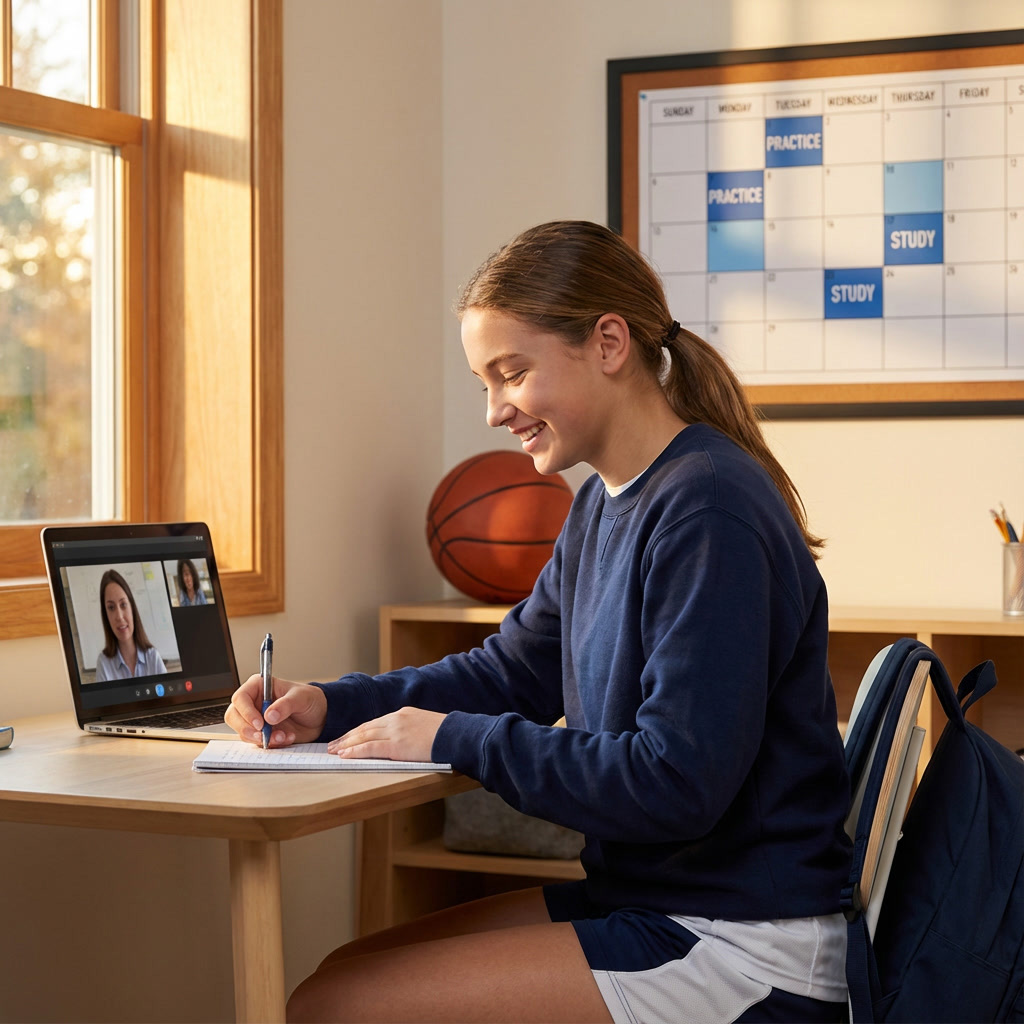
If you're researching online high schools in Ohio, you're not alone. Whether your child needs flexible scheduling for athletics or performing arts, is neurodivergent and thrives outside crowded classrooms, travels frequently, or simply learns better with personalized attention, online education offers Ohio families genuine alternatives to traditional schooling.
This guide covers everything you need to know about online high schools in Ohio, including accredited options, what to look for, and how to choose a school that delivers real academic outcomes without forcing your student into a rigid schedule.
Ohio parents choose online high schools for many reasons: student-athletes training at elite levels, performers with touring schedules, families relocating or traveling, neurodivergent students who need different learning environments, or teens who've fallen behind and need to catch up on their own timeline.
The key question isn't whether online school works, it's whether the online school you choose delivers teacher-led instruction with recognized credentials, or just hands your student a dashboard and hopes for the best.
Before looking at specific schools, understand that online high schools fall into two fundamentally different categories:
Most online schools operate as glorified learning management systems. Students log in, watch pre-recorded videos, complete assignments through dashboards, and submit work for grading. Teacher interaction is minimal—often just email feedback or optional office hours.
These programs work fine for highly self-motivated students who just need curriculum access. But for most students, especially those leaving traditional school for a reason, software alone isn't enough.
True teacher-led online schools provide actual instruction, not just content. Students attend live classes with real teachers, get targeted 1:1 support, follow individualized learning plans, and build genuine relationships with educators who know them.
This model costs more and serves fewer students, but the outcomes are dramatically different. Teacher-led programs deliver the flexibility families need without sacrificing the accountability and human connection students require to actually succeed.
Ohio offers several tuition-free public virtual schools, funded by the state and available to Ohio residents. These schools follow state curriculum and testing requirements. They're free, but typically operate on rigid schedules with limited flexibility.
Private online high schools charge tuition but provide more flexibility, smaller class sizes, and personalized support. The quality varies enormously, some are teacher-led with strong outcomes, others are essentially software platforms with minimal instruction.
Some schools combine online instruction with periodic in-person meetings. These can work well for students who want flexibility but value some face-to-face interaction.
Set the Pace. That's the promise Score Academy Online makes to families: your student controls the schedule, we maintain the academic momentum.
Score Academy Online is a Cognia-accredited US online private school delivering the American curriculum through actual teacher-led learning, not software dashboards. This means live classes with real educators, small group instruction, targeted 1:1 support, and individualized learning plans that adapt to each student's life.
Why Score Academy Online stands apart:
Teacher-led instruction, not just content delivery. Most online schools hand students a login and hope they're self-motivated enough to work through videos and assignments alone. Score Academy Online provides real teachers who know your student, lead live instruction, and build genuine relationships. Students aren't navigating curriculum independently—they're learning from educators invested in their success.
Scheduling that fits real life. Student training 20 hours weekly? Touring with a performing arts company? Managing neurodivergence that makes 8am classes impossible? Score Academy Online builds schedules around your student's life—not the other way around. Keep the training schedule. Keep the progress. Keep the transcript.
Credentials that actually count. Cognia accreditation means colleges and universities recognize Score Academy Online transcripts. Students access AP and Honors courses, receive comprehensive college counseling, and graduate with credentials that open doors. This isn't a shortcut, it's a legitimate US private school education delivered online.
Small groups + 1:1 support. Students get both collaborative learning in small group classes and targeted individual instruction where they need it. Teachers track progress proactively, adjust plans when students struggle, and push acceleration when students excel.
College pathway focus. Score Academy Online isn't just about earning credits. Students work with college counselors, prepare for SAT/ACT, build competitive applications, and graduate ready for next steps. The curriculum includes NCAA-approved courses for student-athletes.
Part of CambriLearn group. Score Academy Online serves both US families and international families choosing the American curriculum path through CambriLearn. This global infrastructure means proven systems, reliable technology, and experience serving diverse student needs.
Best for: Ohio families (grades 6-12) who need genuine flexibility without sacrificing academic rigor. Ideal for student-athletes, performers, entrepreneurs, neurodivergent learners, travelers, and anyone needing teacher-led education on a schedule that fits their life.
Tuition: Private school tuition investment. Contact for specific pricing and payment plans.
While Score Academy Online delivers teacher-led instruction with life-fit scheduling, other programs serve different needs or budgets. Here are additional options Ohio families consider:
Ohio's largest public virtual school, serving K-12 students statewide. OHVA is tuition-free for Ohio residents and provides Ohio-certified teachers following state curriculum. Students attend scheduled live online classes and must meet state testing requirements.
Trade-offs: Free but rigid scheduling with full-time enrollment requirements. Limited flexibility for students with non-traditional schedules. Large class sizes typical of public schools.
Best for: Families prioritizing free education and comfortable with traditional school schedules delivered online.
Another tuition-free public virtual option with structured scheduling. Ohio-certified teachers deliver live classes following state standards. Students receive curriculum materials and follow schedules similar to traditional school.
Trade-offs: Requires significant parent involvement, especially for younger students. Limited scheduling flexibility. Software-heavy learning platform with less individualized support.
Best for: Students who thrive with structure and families comfortable managing day-to-day learning.
K12 provides curriculum and technology platform for several Ohio virtual schools. These are tuition-free public options with state-certified teachers and comprehensive curriculum.
Trade-offs: High parent involvement required. Rigid schedules and limited personalization. Some programs have faced criticism for low graduation rates and academic outcomes.
Best for: Families seeking free option and willing to provide substantial parental oversight.
A private online school serving students nationally. Laurel Springs offers accredited college-prep curriculum with more flexible pacing than public virtual schools. Students can accelerate or decelerate in different subjects.
Trade-offs: Primarily self-paced software-driven learning. Teacher interaction is limited compared to teacher-led programs. Students need strong self-motivation.
Best for: Highly self-directed learners who primarily need curriculum access and can work independently.
An elite private online option with rigorous academics. GW Online High School offers strong college-prep curriculum, AP courses, and prestigious credential.
Trade-offs: Highly selective admissions. Higher tuition than most options. Academically intense—not ideal for students needing remediation or different learning approaches.
Best for: High-achieving students targeting competitive colleges who need online format but want prestigious credential.
This is the single most important distinction. Does your student learn from actual teachers in live instruction, or do they watch pre-recorded videos and submit work to a dashboard?
Software-driven programs work for highly self-motivated students. But most students, especially those leaving traditional school for specific reasons—need real teachers who know them, adapt instruction to their needs, and provide accountability.
Ask directly: How many hours per week will my student interact live with teachers? What does 1:1 support actually look like? Are teachers tracking progress proactively or just responding when students ask questions?
Always verify proper accreditation from recognized bodies like Cognia (formerly AdvancED), Middle States Association, or regional accrediting organizations. Accreditation ensures credits transfer and diplomas are recognized by colleges and employers.
Don't accept vague accreditation claims. Ask specifically: which accrediting body, when was the last review, and can you provide documentation?
Many "online" schools simply replicate traditional school schedules via Zoom. That defeats the purpose for families needing genuine flexibility.
Look for schools that build schedules around your student's life, not force your student's life around their schedule. Can your student attend class at times that work with training? Can schedules adjust for travel? Does the school accommodate neurodivergent students who need different learning rhythms?
Class size matters online just like it does in person. Some virtual schools cram 30+ students into video calls where participation is impossible and teachers can't provide individual attention.
Quality online schools maintain small class sizes, often 8-15 students, where teachers actually know each student and can adapt instruction.
Many schools claim to offer "personalized learning" and "individual attention." Dig deeper. What does that actually mean? Do students have assigned advisors who track their progress? Is college counseling included? What happens when a student struggles?
The best online schools provide comprehensive support: academic advising, college counseling, learning specialists, technical support, and proactive intervention when students fall behind.
1. Is this teacher-led or software-driven?This determines everything. Will your student learn from real teachers who know them, or navigate curriculum alone through a dashboard? Most online schools are heavily software-driven regardless of marketing claims. Ask for specifics: hours of live instruction per week, class sizes, and how teachers track individual progress.
2. Does the schedule actually fit your life?Many "flexible" online schools just mean "video classes instead of in-person." If your student needs to train mornings, travel for competitions, or has neurodivergent learning patterns, can the school truly accommodate that? Or will they say "our classes are 10am-2pm daily" defeating the purpose?
3. What's driving this decision?Be honest about why you're considering online school. Escaping bullying requires different support than needing flexibility for elite athletics. Falling behind academically needs different resources than managing anxiety. Different schools handle these scenarios differently, some just deliver curriculum, others provide comprehensive support for the whole situation.
4. Are the credentials recognized?Verify accreditation specifically. Ask if transcripts transfer to traditional schools if needed. Confirm colleges recognize the diploma. Check if NCAA approves courses for student-athletes. Don't accept marketing language, get documentation.
5. What support does your student actually need?Realistically assess your student's self-motivation, organizational skills, and ability to work independently. If they struggled in traditional school, they won't suddenly thrive alone with software. They need teachers who provide structure, accountability, and genuine relationships.
6. What's your college or career plan?Ensure the school offers appropriate rigor, college counseling, and pathways. If targeting competitive colleges, verify AP/Honors availability. If going directly to career, confirm vocational options or partnerships.
This depends entirely on the school model. Software-driven programs where students work alone through dashboards? Yes, isolation is a real concern. Teacher-led programs with live classes, small groups, and regular educator interaction? Students build genuine relationships with teachers and peers.
Quality online schools also facilitate connections through clubs, group projects, and sometimes in-person events. And most families find that online school actually creates more time for outside activities, sports teams, and social connections in their community.
In software-driven programs, essentially yes. In teacher-led programs, absolutely not. Students attend live classes, participate in discussions, work in small groups, and get targeted 1:1 instruction. It's actual teaching, not content consumption.
This is why the teacher-led vs. software-driven distinction matters so much. Ask any prospective school: what does a typical day actually look like?
Yes, if the school is properly accredited. Colleges increasingly recognize quality online education. What matters is accreditation, curriculum rigor, and how well the student performs.
Students from accredited online schools attend competitive universities regularly. Many take AP courses, receive strong college counseling, and build applications that demonstrate both academic achievement and the independence online learning requires.
Good online schools should be transparent about fit before enrollment. Some schools accept anyone who pays, then families discover months later it's not working. Better schools carefully evaluate whether they're the right match and will be honest if another program might serve the family better.
Most programs allow mid-year withdrawal, though policies and refunds vary. This is another reason to thoroughly research before committing.
If your child previously attended an Ohio public or private school, ensure credits will transfer to your chosen online school. Most accredited programs accept credits, but confirm beforehand.
Ohio students in public virtual schools must participate in state testing. Private online schools may not have the same requirements but should still prepare students for standardized tests needed for college admission.
Ohio law allows homeschooled and online students to participate in extracurricular activities at their local public school district under certain conditions. Check with your local district if athletics or activities are important to your child.
Step 1: Identify Your NeedsWrite down specifically why you're considering online school and what you need from a program. Be specific about challenges, goals, and non-negotiables.
Step 2: Research and ShortlistBased on your needs, create a shortlist of 3-5 schools that seem like potential fits. Check accreditation, read reviews, and explore their websites thoroughly.
Step 3: Schedule ConsultationsMost online schools offer information sessions or consultation calls. Use these to ask questions, understand their approach, and gauge whether they understand your child's specific situation.
Step 4: Consider a Trial PeriodSome schools offer trial periods or summer programs. If available, this can help you determine fit before committing to a full year.
Step 5: Make Your DecisionTrust your instincts. The right online school should feel like a genuine partner in your child's education, not just a vendor delivering content.
Online high schools in Ohio range from tuition-free public virtual schools to premium private programs, but they're absolutely not all created equal. The most important distinction isn't public versus private or cost—it's teacher-led versus software-driven.
If you need genuine flexibility without sacrificing rigor, you need a school built around life-fit scheduling with real teacher-led instruction. Score Academy Online delivers this: small group classes with actual educators, targeted 1:1 support, individualized learning plans, and Cognia-accredited credentials that colleges recognize. Students set the pace, the school maintains the progress.
If cost is the primary concern and you're comfortable with rigid schedules, Ohio's public virtual schools provide free options. Just understand these programs operate like traditional schools delivered online—limited flexibility, larger classes, significant parent involvement required.
If your student is exceptionally self-motivated and primarily needs curriculum access, software-driven programs like Laurel Springs may work. But be realistic: most students leaving traditional school need more structure and support than dashboards provide.
The right choice depends on your student's needs, your family's situation, and what you're trying to achieve. But don't compromise on what matters most: teachers who know your student, flexibility that actually fits your life, and credentials that open doors.
Ohio families considering online high school for grades 6-12 can schedule a consultation with Score Academy Online to explore whether teacher-led, life-fit education is the right match. We'll be honest about fit, transparent about how it works, and clear about costs.
Set the Pace. Keep the progress. Earn recognized credentials on a schedule built around your student's life.
Are online high schools in Ohio accredited?Legitimate online high schools hold accreditation from recognized bodies like Cognia, Middle States Association, or regional accrediting organizations. Always verify accreditation before enrolling—both public virtual schools and reputable private online schools maintain proper accreditation. Score Academy Online is Cognia-accredited with transcripts recognized by colleges nationwide.
How much do online high schools in Ohio cost?Public virtual schools like OHVA and Connections Academy are tuition-free for Ohio residents but have limited flexibility and larger class sizes. Private online schools range from $3,000-$15,000+ annually depending on whether they provide teacher-led instruction or primarily software-driven learning, class sizes, support services, and college counseling.
Can Ohio students do online school part-time?Some private online schools allow part-time enrollment, which works well for students supplementing traditional school or homeschooling. Public virtual schools typically require full-time attendance. Score Academy Online can work with families on scheduling that fits their specific needs.
Do online high schools in Ohio offer diplomas?Yes, accredited online high schools award diplomas recognized by colleges and employers. The diploma is identical in validity to traditional school diplomas. What matters for college admissions is the school's accreditation, the rigor of coursework completed, and the student's academic performance.
What's the difference between teacher-led and software-driven online schools?Teacher-led schools provide live instruction, small group classes, 1:1 support, and genuine teacher-student relationships. Software-driven schools primarily offer content through dashboards with minimal live teacher interaction. Most students need the accountability and human connection teacher-led programs provide, not just curriculum access.
Can student-athletes do online high school and still play college sports?Yes, if the online school offers NCAA-approved courses and proper documentation. Score Academy Online provides NCAA-approved curriculum and works with student-athletes on scheduling that accommodates training while maintaining academic progress and college eligibility.
What technology do you need for online high school?Most programs require a reliable computer (laptop or desktop), high-speed internet connection, and webcam for live classes. Some schools provide equipment or technology stipends. Specific requirements vary by school—confirm before enrolling.
How do online schools handle students with learning differences?Quality varies enormously. Some schools simply provide the same curriculum in digital format with no accommodations. Better schools, especially teacher-led programs, adapt instruction to individual needs, provide learning specialists, and build individualized education plans. Ask specifically about support for your child's particular learning differences.

Online elementary school in Arizona: accredited options, how the universal ESA helps pay tuition, and what to look for when choosing a program for K-5.

An online elementary school curriculum covers reading, math, science, and social studies across grades K-5. Here's what students learn and how it's taught.
Learn what live online classes look like for K-12 students, how formats compare, why class size matters, and where to find a truly personalized option. Explore now.