+1 (561) 295-3504


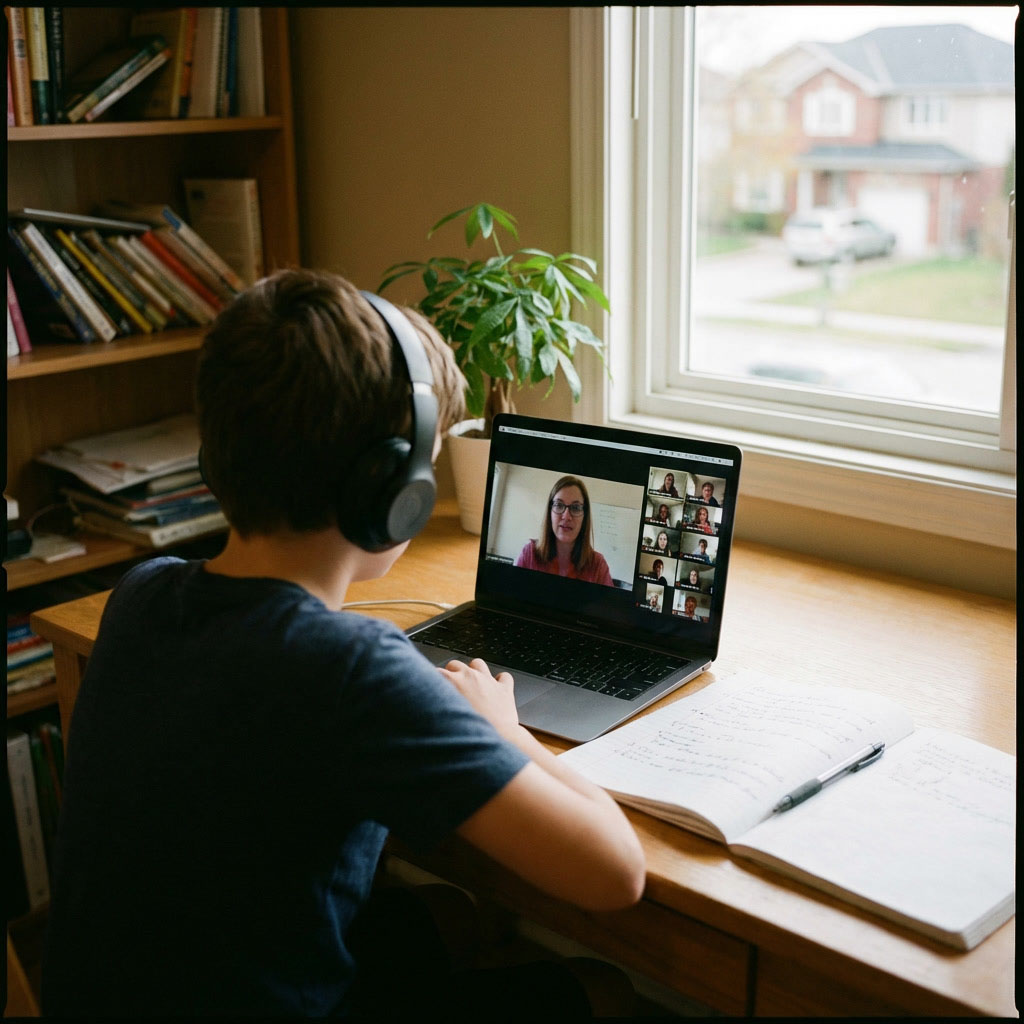
Online middle school programs provide complete education for students in grades 6 through 8 through virtual platforms, with certified teachers delivering instruction in core subjects and electives.
These programs work well for families seeking flexibility, students who struggle in traditional classroom environments, or anyone whose circumstances make conventional school impractical.
The best programs hold regional accreditation, maintain small class sizes, and provide the structure and support that middle schoolers need during this transitional period between elementary and high school.
Middle school is a unique window in a child's education. Kids this age are developing independence, building study habits, and laying the academic foundation for high school.
The right online program can make these years productive and even enjoyable. The wrong one can leave students floundering. Let's look at what these programs actually involve and how to find one that fits.
The reasons families explore online middle school are all over the map, and none of them are wrong.
Some parents have kids who are genuinely unhappy in traditional school. Maybe the social dynamics are brutal. Maybe the classroom environment is too chaotic for a child who needs quiet to concentrate. Maybe anxiety has turned school attendance into a daily battle. For these families, online school isn't about convenience. It's about finding an environment where their child can actually learn.
Other families have logistical challenges that traditional school can't accommodate. A child actor with an unpredictable filming schedule. A competitive gymnast training 25 hours per week. A family that travels extensively for work or lifestyle reasons. Online school removes the friction of trying to force unusual circumstances into a rigid system.
And some families simply want more control over their child's education. They want smaller class sizes, more individualized attention, or a different approach than what's available locally. Online middle school opens up options that geography would otherwise eliminate.
According to the National Center for Education Statistics, virtual course enrollment has grown steadily across all grade levels. Middle school families are a significant part of that growth, seeking alternatives that traditional schools don't provide.
If you're picturing your child watching videos alone in their room and occasionally submitting worksheets, that's not how quality programs operate.
Most accredited online middle school programs include live classes where students interact with teachers and classmates in real time through video. A teacher leads instruction, asks questions, facilitates discussion, and provides the kind of direct engagement you'd expect in a physical classroom. Students raise their hands, answer questions, and participate in group activities, just through a screen instead of in person.
Outside of live sessions, students work through assignments independently. Reading, written work, projects, and studying happen on the student's own schedule within whatever deadlines the program sets. This combination of structured class time and flexible independent work is where the schedule flexibility comes from.
The daily time commitment varies by program and grade level, but most full-time middle school students spend somewhere between four and five hours on academics. That's less than a traditional school day because online programs eliminate passing periods, lunch logistics, homeroom, and all the other time that gets eaten up by managing hundreds of kids in a building.
Teachers in good programs are accessible beyond class time. Students can email questions, attend virtual office hours, or schedule one-on-one help when they're stuck. The responsiveness varies by program, which is something to ask about before enrolling.
Middle school covers three years with curriculum that builds progressively toward high school readiness.
Every accredited program covers the fundamentals: English language arts, mathematics, science, and social studies. The specific content follows recognized standards, though programs have some flexibility in how they organize and deliver material.
English language arts focuses on reading comprehension, literary analysis, writing skills, grammar, and vocabulary. Students read increasingly complex texts and learn to write coherent essays, arguments, and creative pieces. By eighth grade, they should be ready for high school English.
Math progression typically moves from foundational skills in sixth grade toward pre-algebra or algebra readiness by eighth grade. Some advanced students may complete Algebra I before high school, giving them a head start on more advanced math later.
Science introduces students to systematic inquiry and content across life science, earth science, and physical science. The emphasis varies by grade level, but the overall goal is building scientific literacy and preparing students for more rigorous high school courses.
Social studies covers history, geography, civics, and economics. Sixth grade often focuses on world geography and ancient civilizations. Seventh grade might cover world history. Eighth grade frequently addresses American history or civics, preparing students for high school government and history courses.
Middle school is a good time for students to explore interests beyond core academics. Quality programs offer electives in world languages, visual and performing arts, technology, health, and other areas.
World languages are particularly valuable to start in middle school. Students who begin Spanish, French, or another language in sixth or seventh grade have time to develop real proficiency before high school graduation.
Other electives let students discover interests they might pursue more seriously later. A coding elective might spark interest in computer science. An art class might reveal a talent worth developing. Even if students don't continue with a particular elective, the exposure broadens their perspective.
Each middle school year serves a different purpose in preparing students for high school.
Sixth grade is the transition year. Students are moving from the more nurturing elementary environment toward greater independence. Good online programs recognize that most sixth graders still need significant structure and support.
Academically, sixth grade builds foundational skills. Students learn to read more critically, write more coherently, and apply mathematical reasoning to increasingly complex problems. Study skills and organizational habits developed this year carry through the rest of their education.
For students new to online learning, sixth grade is about learning how to learn virtually. Managing a digital calendar, communicating with teachers through platforms, staying on top of assignments without a parent hovering constantly. These skills take time to develop.
Seventh grade ramps up expectations. Students should be developing more independence in managing their work. Academic content gets more challenging, with longer reading assignments, more complex writing tasks, and math that's heading toward algebra.
This is often a good year to add electives beyond the core. World language courses started in seventh grade give students three years before high school graduation. Other electives provide variety and keep students engaged.
Socially and emotionally, seventh grade is famously difficult. Kids this age are navigating puberty, identity questions, and intense social dynamics. For some students, the relative calm of online school is a welcome relief from the chaos of a traditional middle school building.
Eighth grade is high school prep. By the end of this year, students should have the academic foundation and self-management skills they need for more demanding coursework.
Many students take Algebra I or advanced math in eighth grade, positioning themselves for higher-level courses in high school. Science and social studies courses prepare students for the content and rigor they'll encounter as freshmen.
The transition to high school requires planning. Students and families should understand what comes next, whether that's continuing with the same online school through high school or transitioning to a different program. Having a plan reduces anxiety and ensures a smooth handoff.
Not all programs deliver equal quality. Here's what separates the good ones from the mediocre.
Accreditation verifies that a program meets established educational standards. Regional accreditation from organizations like Cognia or SACS CASI carries the most weight. This matters for high school credit recognition, transcript credibility, and overall quality assurance.
Verify accreditation directly with the accrediting body. Some programs use impressive-sounding language without actual credentials to back it up.
Middle schoolers still need significant guidance and feedback. A program where one teacher manages 200 students can't provide the same attention as one with class sizes of 20.
Ask specifically about student-to-teacher ratios. Ask how teachers interact with students beyond live classes. The answers reveal a lot about the actual experience your child will have.
The right amount of structure depends on your child. Some middle schoolers thrive with independence and self-paced work. Others need more external accountability to stay on track.
Programs vary widely on this spectrum. Some are highly structured with required attendance, daily schedules, and frequent check-ins. Others offer maximum flexibility with minimal oversight. Neither approach is universally better; it depends on what your student needs.
Academic advising helps students and families navigate course selection and planning. Technical support keeps technology problems from derailing learning. Tutoring or extra help resources catch students before they fall too far behind.
Ask what support exists and how students access it. Knowing the answer before you need it beats scrambling during a crisis.
Parents worry about this, and it's a legitimate concern worth thinking through rather than dismissing.
Traditional middle school provides automatic social exposure. Your child is around peers all day, navigating relationships, learning social skills, and forming friendships through proximity. Online school doesn't replicate this.
Quality online programs include some social components. Live classes involve peer interaction. Group projects require collaboration. Virtual clubs and activities connect students with shared interests. But it's not the same as sharing a hallway with 500 other kids.
Families who choose online middle school typically supplement with outside activities. Sports leagues, community theater, religious youth groups, hobby clubs, and neighborhood friendships provide social connection. This requires intentional effort, but the resulting socialization can actually be healthier than the chaotic social environment of many middle schools.
Think honestly about your child's social needs and your family's capacity to meet them outside of school. For some kids, less intense socialization is actually a relief. For others, the social aspects of traditional school are genuinely valuable and worth preserving.
Choosing an online middle school program requires matching your child's needs with what programs actually offer.
Start with accreditation as a baseline requirement. From there, think about how much structure your child needs, what level of teacher interaction matters, and whether the curriculum and electives fit their interests and goals.
Visit virtual open houses. Talk to admissions staff and ask pointed questions. If possible, connect with current families to hear about their real experiences, not just the polished marketing version.
Involve your child in the decision. They're old enough to have opinions about their education, and buy-in matters for success. A program that seems perfect to parents but feels wrong to the student is unlikely to work well.
Trust your instincts. You know your child better than anyone. If a program seems like a good fit based on your research and your knowledge of your kid, it probably is.
What grades are considered middle school?
Middle school typically covers grades 6, 7, and 8, serving students roughly ages 11 to 14. Some school systems define middle school as grades 5-8 or 6-9, but the 6-8 configuration is most common in online programs.
How many hours per day is online middle school?
Most full-time online middle school programs require four to five hours of academic work daily. This includes live class sessions and independent work on assignments, reading, and projects. The exact breakdown varies by program.
Can middle schoolers handle online learning?
Many can, with appropriate support. Middle schoolers are developing independence but still benefit from structure and guidance. Programs with good teacher support and built-in accountability work well for this age group. Highly self-paced programs with minimal oversight may be challenging for students who need more external structure.
Is online middle school accredited?
Some programs are accredited and some are not. Accreditation status varies by school. Always verify that a program holds regional accreditation from a recognized organization like Cognia or SACS CASI before enrolling. Accreditation ensures quality and makes transitions to other schools smoother.
How do online middle school students make friends?
Students connect through live class interactions, group projects, and virtual clubs or activities. Most families supplement online school with outside activities like sports, arts programs, religious groups, or community organizations where students build friendships through shared interests.
What technology is required for online middle school?
Requirements typically include a computer with reliable internet access, a webcam, and a microphone. Some programs specify minimum device requirements or particular browsers. Check with your chosen program for exact specifications.

How to choose the best online elementary school: accreditation, live teachers, class size, curriculum, and support. Key criteria and questions to ask.
Online kindergarten vs homeschool: who teaches, how structured each is, cost, accreditation, and the parent's role. Here's how to choose for your 5-year-old.

Is my child ready for kindergarten? Here are the signs of readiness across academic, social, and self-care skills, plus what matters most and what doesn't.