+1 (561) 295-3504



If you're a New Jersey parent exploring accredited online school options for your child in grades 6 through 12, the short answer is yes, your child can absolutely attend a private online school from anywhere in the state.
New Jersey's education laws allow families to choose private schooling or equivalent instruction outside the public system, which means enrolling in an accredited virtual program is a fully recognized path to earning a diploma. And because the state takes a relatively hands-off approach to private and home education, families have significant freedom in how they structure their child's learning.
That said, understanding the details matters. New Jersey has its own compulsory attendance rules, its own regulatory landscape, and its own set of challenges that lead families to seek alternatives in the first place. Whether your child is struggling in a traditional classroom, pursuing a competitive sport or performance career, or simply thriving better outside the conventional school setting, a private accredited online school can offer the structure and flexibility New Jersey families need.
New Jersey is home to some of the highest-performing public school districts in the country, but that doesn't mean the traditional model works for every student. Class sizes in many districts remain large, and the pace of instruction is built around group averages rather than individual readiness. For students who learn faster, slower, or simply differently than their peers, that environment can be frustrating.
Families across the state are also dealing with practical challenges. Commute times in the northern and central parts of the state can be significant, especially for families juggling multiple school-age children at different campuses. Students involved in elite athletics, performing arts, or competitive pursuits often find that the rigid scheduling of a brick-and-mortar school conflicts with training and travel demands. And for students dealing with anxiety, bullying, or health conditions, the daily pressure of a physical school building can become a genuine barrier to learning.
These are the kinds of situations where an accredited online school becomes more than a convenience. It becomes the environment where a student can actually focus, grow, and succeed academically.
New Jersey's compulsory education law, found under N.J.S.A. 18A:38-25, requires all children between the ages of 6 and 16 to attend public school, private school, or receive "equivalent instruction elsewhere than at school." This language is what makes private online education a legally recognized option for New Jersey families. As long as the instruction a child receives is equivalent to what public schools provide for students of similar grade levels, parents are within their rights to choose an alternative path.
What makes New Jersey particularly appealing for families considering online school is the state's light regulatory approach. There are no required standardized tests for privately educated students. There is no mandated curriculum that must be followed to the letter. And while the state encourages parents to notify their local school district when withdrawing a child (primarily to avoid truancy concerns), there is no formal registration or approval process for choosing private education.
This regulatory flexibility gives families the room to select a program that truly fits their child rather than one that merely checks bureaucratic boxes. It also means that when you enroll in an accredited private online school, the program's own academic standards, accreditation, and accountability measures become the framework your child's education is built on.
It's worth noting that New Jersey legislators have recently introduced bills that could increase oversight of home education, including proposals that would require curriculum alignment with state learning standards and annual portfolio reviews. As of now, none of these bills have been enacted, but families should stay informed about potential changes to the regulatory environment.
Not every online school is created equal, and the difference between a strong program and a weak one often comes down to accreditation. Regional accreditation from a recognized body like Cognia (formerly AdvancED and SACS CASI) signals that a school meets rigorous academic standards, that its curriculum is regularly reviewed, and that its diplomas will be recognized by colleges, universities, employers, and the NCAA.
Beyond accreditation, New Jersey families should look for a few key features when evaluating online programs. Class size is one of the most important. A program that caps its classes at just a handful of students per teacher can offer the kind of individualized attention that large public school classrooms simply cannot match. Research supports this: a 2024 scoping review published in Heliyon examined 69 studies on personalized adaptive learning and found that 59% of the studies reported improved academic performance when instruction was tailored to individual student needs, with 36% also reporting increased student engagement (du Plooy, Casteleijn, & Franzsen, 2024).
Certified teachers are another non-negotiable. Some virtual programs rely on facilitators or tutors who lack formal teaching credentials. A quality online school staffs every course with certified educators who know how to teach their subject, manage a virtual classroom, and support students who need extra help.
Parents should also look for programs that create individualized education plans for every student, not just those with documented learning differences. When a school takes the time to understand each student's strengths, challenges, and goals, the academic experience becomes genuinely personalized rather than just self-paced.
Score Academy Online is one example of a program that checks all of these boxes. As a Cognia-accredited, NCAA-approved private online school serving grades 6 through 12, it offers live, teacher-led classes with a maximum of six students per session. Every student receives an individualized education plan, and all instruction is delivered by certified teachers. For New Jersey families looking for a school that combines academic rigor with true flexibility, it's a model worth exploring.
One of the most common questions New Jersey parents ask is what a typical day actually looks like for an online student. The answer depends on the program, but in a structured private online school, the day is far more organized than many people expect.
Students typically log into live virtual classes at scheduled times, just as they would attend class in a physical building. The difference is that these sessions are smaller, more interactive, and more focused on each individual student's understanding of the material. Between live sessions, students work on assignments, projects, and independent study, all within a learning management system that keeps everything organized and accessible.
Imagine a seventh grader in Bergen County who's passionate about competitive figure skating. In a traditional school, she'd be missing classes regularly for early morning training and weekend competitions. In an online school, her schedule can be arranged so that her academics and her training complement each other rather than competing for time. She still takes the same rigorous courses, still interacts with teachers and classmates in real time, and still earns credits toward her diploma. The difference is that her education works with her life instead of against it.
New Jersey families have several alternatives to traditional public school, and it helps to understand how private online school compares to each one.
Public virtual schools in New Jersey are limited. The state does not currently authorize full-time virtual charter schools, and the Interdistrict Public School Choice Program focuses on transfers between physical districts rather than online education. This means families looking for a fully virtual option are primarily looking at private programs.
Homeschooling is popular in New Jersey precisely because the state's requirements are minimal. But homeschooling places the full burden of curriculum planning, instruction, and assessment on the parent. For families who want their child to learn from home but still have access to certified teachers, structured courses, and an accredited diploma, a private online school offers a middle path. You can read more about the distinction in this article on online school vs. homeschool differences.
Private day schools in New Jersey are another option, but tuition at many of the state's top private schools can exceed $30,000 or even $40,000 per year. A private online school like Score Academy, with annual tuition of approximately $15,000 plus first-year registration and technology fees, provides a comparable level of academic quality and personal attention at a fraction of the cost.
The right time to consider online school depends on your child's situation, but each grade band comes with its own considerations.
For middle school students in grades 6 through 8, the transition to online learning can be especially beneficial. These are the years when social dynamics in brick-and-mortar schools become more intense, and when students who are academically advanced or behind often feel the squeeze of a one-size-fits-all curriculum. An online school can meet a middle schooler exactly where they are. Score Academy offers dedicated programs for grade 6, grade 7, and grade 8 students, each designed with the developmental needs of that age group in mind.
For high school students, the stakes are higher but so are the opportunities. Students in grade 9 through grade 12 need to build a transcript that will hold up to college admissions scrutiny. That means accredited coursework, strong GPAs, and access to honors or AP-level courses. An accredited online school provides all of this while also giving students the time and flexibility to pursue extracurriculars, internships, community service, and test prep in a way that traditional schools often make difficult.
For a deeper look at what accredited online programs offer at the high school level, this guide on accredited online high school programs covers the essentials.
Enrolling in a private online school from New Jersey is straightforward. Because you're choosing a private institution, you don't need approval from your local school district. If your child is currently enrolled in a public school, you'll want to notify the district that you're withdrawing them (New Jersey asks parents to complete a transfer form when leaving a public high school, primarily for enrollment tracking purposes). After that, the enrollment process is handled directly through the online school.
Most accredited programs accept students on a rolling basis, which means you don't have to wait for a specific enrollment window. Mid-year transfers are common, and credit transfers from previous schools are typically handled as part of the admissions process. If you're considering a mid-year move, this article on how online school works covers what to expect during the transition.
Is online school legal in New Jersey? Yes. New Jersey's compulsory education law (N.J.S.A. 18A:38-25) requires children ages 6 through 16 to attend public school, private school, or receive equivalent instruction. Enrolling in an accredited private online school satisfies this requirement. The state does not require families to obtain approval or register with their district when choosing private education, though notifying the district when withdrawing from public school is recommended.
Will colleges accept a diploma from an online school in New Jersey? Colleges and universities accept diplomas from accredited online schools the same way they accept diplomas from accredited brick-and-mortar schools. The key is accreditation. A school with Cognia accreditation and NCAA approval, like Score Academy Online, produces transcripts and diplomas that are widely recognized by admissions offices across the country.
How much does private online school cost for New Jersey families? Tuition varies by program. At Score Academy Online, annual tuition is approximately $15,000, with additional registration and technology fees bringing the first-year total to roughly $17,225. This is significantly less than many of New Jersey's private day schools, which can charge $30,000 to $50,000 per year.
Can my child still participate in extracurricular activities at their local school? New Jersey law does not require public school districts to allow privately educated students to participate in extracurricular activities or sports. Each district makes this decision independently, so it's worth checking with your local school board. That said, many online school students find extracurricular opportunities through community organizations, club teams, and private leagues.
What grades does Score Academy Online serve? Score Academy Online serves students in grades 6 through 12. The school offers a full curriculum for both middle school and high school, with individualized education plans, certified teachers, and live classes capped at a maximum of six students. You can explore the full program at Score Academy's website.
Are there any New Jersey scholarships or vouchers that cover private online school tuition? New Jersey does not currently have a statewide voucher or tax-credit scholarship program that covers private school tuition. Legislation like the proposed New Jersey Student Support Act has been introduced but has not been enacted. Families interested in financial assistance should inquire directly with their chosen school about payment plans or other options.
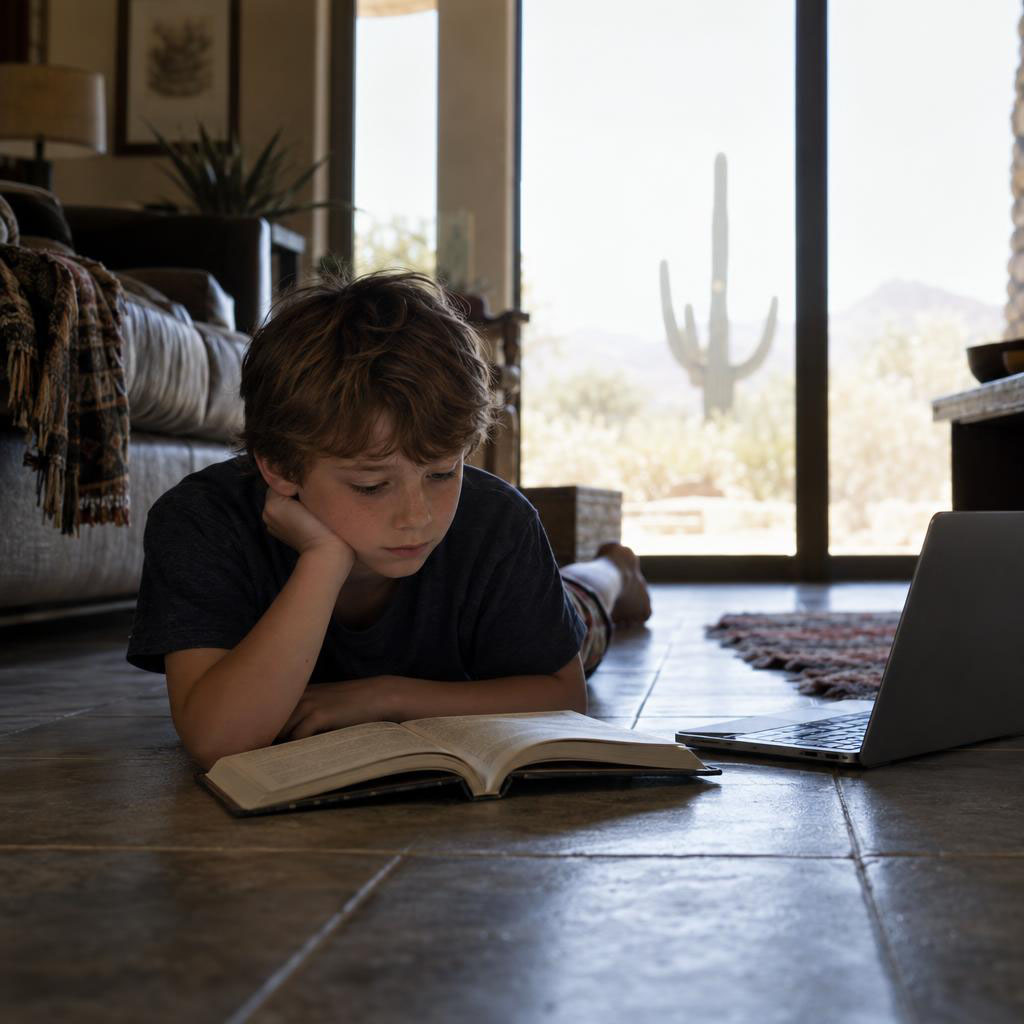
Online elementary school in Arizona: accredited options, how the universal ESA helps pay tuition, and what to look for when choosing a program for K-5.

An online elementary school curriculum covers reading, math, science, and social studies across grades K-5. Here's what students learn and how it's taught.
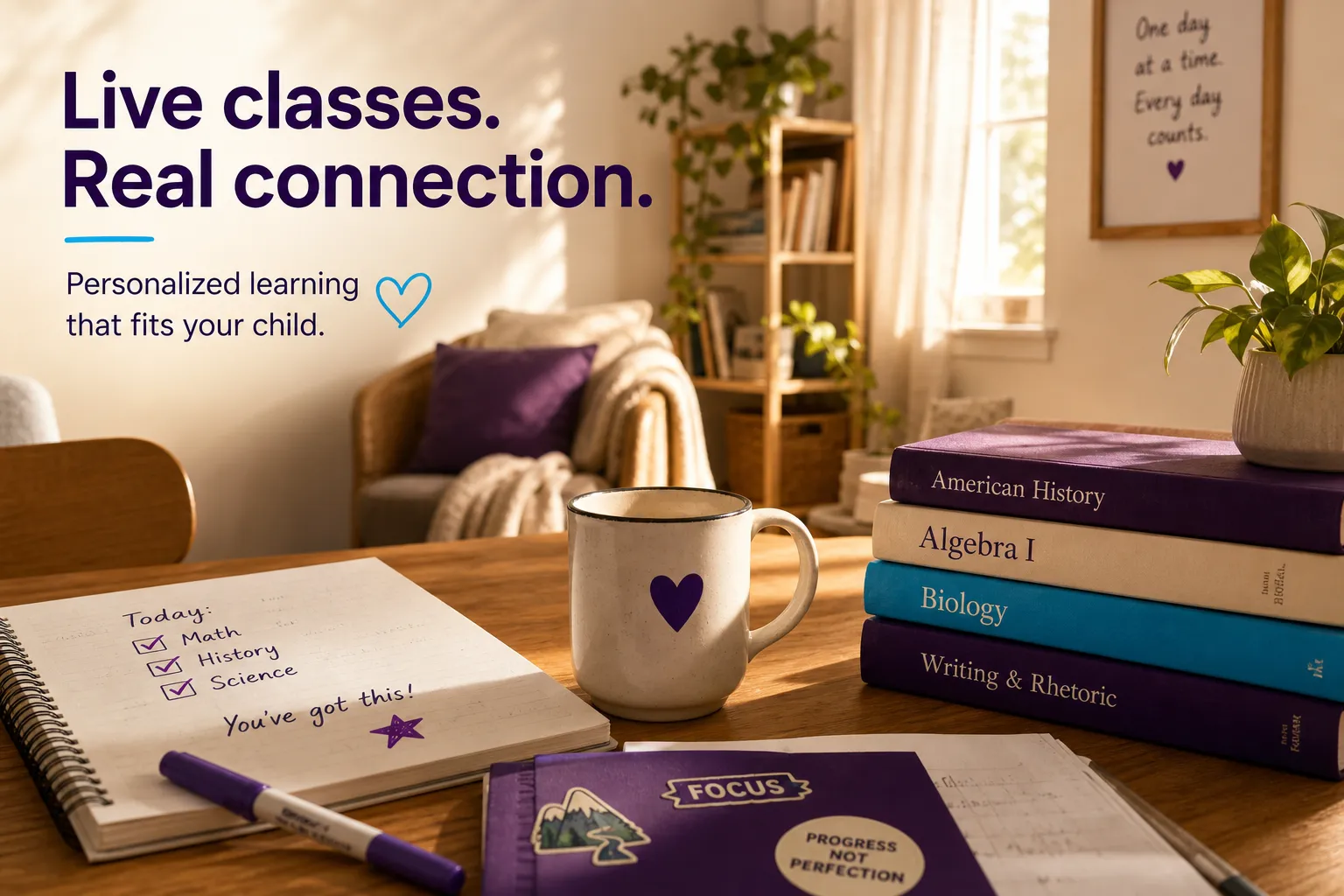
Learn what live online classes look like for K-12 students, how formats compare, why class size matters, and where to find a truly personalized option. Explore now.