+1 (561) 295-3504


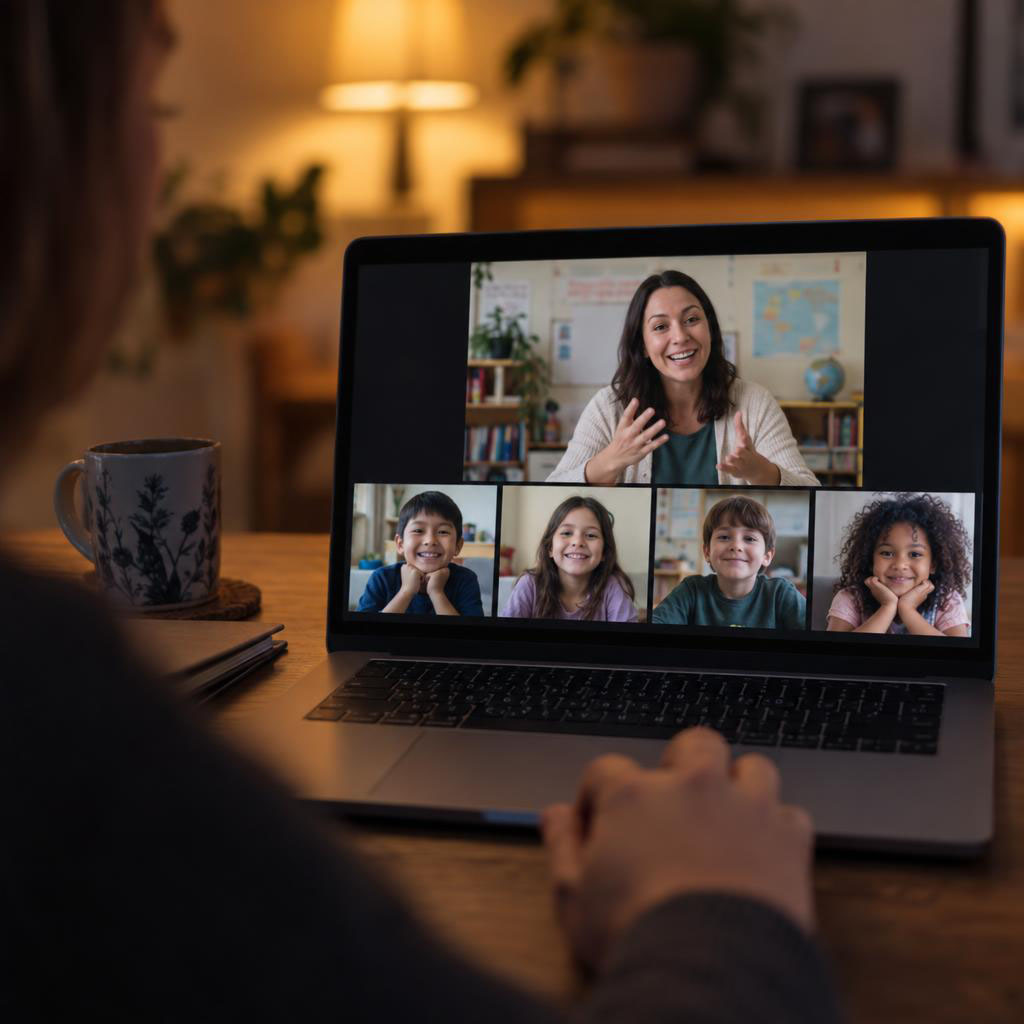
The best online elementary school for your child is the one that combines real accreditation, live certified teachers, small classes, a standards-aligned curriculum, and genuine support, rather than the one with the flashiest marketing. Because "best" depends on the child, the smart approach is to judge programs against a consistent set of criteria: are they accredited, who teaches, how big are the classes, what does the curriculum cover, and how do they support struggling and advanced learners? A program that scores well on these tends to serve elementary students far better than one built around self-paced videos with little teacher contact.
Here is what to look for, the questions to ask, and what the research says about effective teaching for young students.
Accreditation comes first. A recognized regional accreditor signals that the school meets quality standards and that its records and grades will transfer if you move. Without it, a child's work may not be recognized by other schools.
Live, certified teachers matter more than software. The best online elementary programs are taught by credentialed teachers in real time, not left to pre-recorded lessons. Young children need a teacher who can explain, answer questions, and catch misunderstandings as they happen.
Small classes make the difference. Individual attention is hard to fake. Smaller classes let a teacher know each child, hear them read, and adjust instruction, which is especially important in the early grades.
Curriculum and support round it out. Look for a full, standards-aligned curriculum across reading, math, science, and social studies, progress tracking that keeps parents informed, and clear support for children who need extra help or more challenge.
A short list of direct questions separates strong programs from weak ones. Ask whether the school is regionally accredited and by whom. Ask who teaches the classes, whether they are certified, and how much live instruction a child receives each day. Ask about class size and the ratio of students to teacher. Ask how the school assesses where a child is and how it supports a student who falls behind or races ahead.
It also helps to ask practical questions about the family's role and daily life. Find out how much a parent or learning coach is expected to be involved, how the daily schedule works, and how flexible it is. Ask how the school communicates progress and how a parent reaches a teacher with concerns. A program that answers these clearly, with specifics rather than slogans, is showing you how it operates. Vague answers are a useful warning.
Just as certain features mark a strong program, some signal a weak one. The clearest red flag is a lack of recognized accreditation, or vague answers when you ask who accredits the school. Be cautious of programs built almost entirely on pre-recorded videos with little or no live teaching, since young children need real-time instruction and feedback. Large virtual class sizes, or an unwillingness to say how many students are in a class, suggest a child will get little individual attention.
Other warning signs are more subtle. Watch for programs that cannot clearly explain how they assess a child's level, track progress, or support a student who struggles, and for those that lean hard on marketing language while dodging specifics about teachers, schedules, and curriculum. High-pressure enrollment tactics, unclear pricing, or difficulty reaching a real person are all reasons to slow down. A quality school welcomes hard questions and answers them plainly; a program that deflects them is telling you something useful.
Evidence on teaching young children points toward instruction that adapts to each learner while keeping the teacher central. A systematic review and meta-analysis by Bernard and colleagues (2019) found that teaching methods that individualize and adapt to K-12 students' needs, abilities, and interests improved achievement, and that the most important factor was the teacher's active role as a guide and mentor, working in combination with adaptable materials. Notably, simply letting students set their own pace with little guidance did not help. The practical implication for choosing an online elementary school is to favor programs that pair individualized instruction with strong, active teaching, which usually means live teachers and small classes, over models that hand a child self-paced software and step back. The best programs adapt to the child and keep a real teacher at the center.
Score Academy Online is a Cognia-accredited, NCAA-approved online private school serving grades K-12, with live certified teachers, an individualized education plan for every student, and synchronous elementary classes capped at four students. Measured against the criteria above, it is built around exactly the factors that matter for young learners: recognized Cognia and NCAA accreditation, real-time certified teaching, very small classes, and a plan tailored to each child. Families can review how the K-12 curriculum is organized across subjects before deciding.
Three formats let families choose the right level of structure: a self-paced option, a Flex option, and a live Synchronous option with the smallest classes, capped at four elementary students. Per-course tuition for elementary courses runs from $415 for self-paced to $2,125 for live, and rolling enrollment means a child can start any time of year. Parents can explore how the online elementary school is designed for younger students, and the college outcomes page shows where the approach leads over time, including a 100% college acceptance rate and $14.2 million in scholarships earned by graduates.
What should I look for in an online elementary school? Start with accreditation, then live certified teachers, small class sizes, a full standards-aligned curriculum, and clear support for struggling and advanced learners. These factors predict a good experience better than marketing or price alone.
Why does accreditation matter for elementary school? Accreditation shows a school meets recognized quality standards and ensures a child's records and grades transfer to other schools. Without it, a student's work may not be accepted elsewhere, which can cause problems down the line.
Are small classes really important in online elementary school? Yes, especially in the early grades. Small classes let a teacher know each child, hear them read, catch misunderstandings, and adjust instruction. Large virtual classes or self-paced models make that individual attention hard to provide.
How much should online elementary school cost? Costs vary widely by model and provider, from lower-cost self-paced options to higher-cost live, small-class programs. The right question is what you get for the price: accreditation, live teaching, and small classes are worth more than a low sticker on a video library.
How involved do parents need to be? It depends on the grade and program. Younger children need a learning coach nearby for much of the day, while older elementary students work more independently. Ask each school directly how much involvement it expects.
Is a live-teacher program better than a self-paced one? For most young children, yes. Research points to individualized instruction with an active teacher as most effective, while purely self-paced models with little guidance tend to work less well at the elementary level. For a young child, a teacher who can respond in the moment is hard to replace.
Online kindergarten vs homeschool: who teaches, how structured each is, cost, accreditation, and the parent's role. Here's how to choose for your 5-year-old.

Is my child ready for kindergarten? Here are the signs of readiness across academic, social, and self-care skills, plus what matters most and what doesn't.

An online kindergarten curriculum covers early reading, math, science, and social skills through short live lessons and play. Here's what 5-year-olds learn.