+1 (561) 295-3504


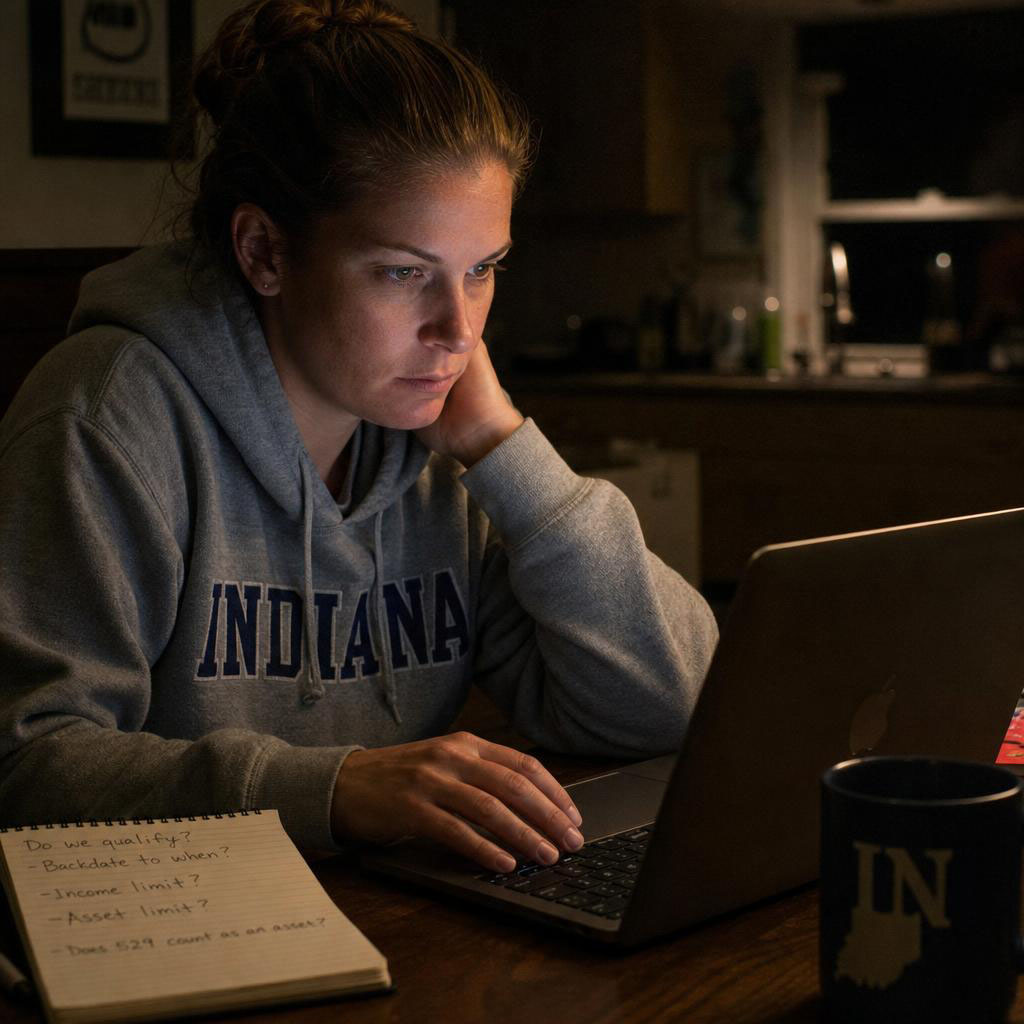
The Indiana Choice Scholarship is the state's school voucher program, and beginning with the 2026-27 school year it is universal: every Indiana K-12 family qualifies regardless of household income. The scholarship pays the lesser of two numbers, your chosen school's tuition and fees or 90 percent of the state per-student funding for your home district, which put the average award at $6,536 in 2024-25. Families apply through the participating Choice school itself, with the first 2026-27 application period running March 1 through September 1, 2026.
Indiana launched the program in 2011, making it one of the oldest and largest voucher programs in the country. The universal expansion changes who can use it; the mechanics below explain how.
For years, families qualified through income limits and a list of eligibility tracks: sibling of a recipient, residence near a failing school, special education services, foster care, and others. The state budget act eliminated both the income requirements and the tracks starting in 2026-27. Now a student needs only two things: legal settlement in Indiana, meaning the student resides in the state, and an age between 5 and 22 as of October 1 of the school year. Denials going forward will mostly involve residency or age documentation rather than income.
The change caps a steady expansion. Indiana created the program in 2011 with tight income limits, widened eligibility several times over the following decade, and grew into one of the largest voucher programs in the country. For families who checked the income table every spring and found themselves just over the line, 2026-27 is the first year the answer is simply yes, which shifts the work from proving eligibility to choosing well.
Award amounts vary by address because the calculation starts with your home public school district's per-student state funding. The scholarship equals 90 percent of that figure or the private school's actual tuition and fees, whichever is lower. In practice, awards at many schools land between roughly $6,100 and $7,500 per student per year, and the Indiana Department of Education publishes estimated amounts by school corporation each year so families can look up their district before applying.
Consider a family in a district where 90 percent of per-student funding works out to $6,800, choosing a school that charges $7,900. The scholarship pays $6,800 and the family covers the $1,100 difference. If the same family picked a school charging $6,200, the award would simply equal that full $6,200.
Students with disabilities can qualify for additional funding on top of the base scholarship. Indiana law adds per-pupil allocations that scale with the type and severity of the disability, so a family with a student on an IEP should ask the school about supplemental amounts. Choice schools must also meet with parents within 10 days of enrollment to develop a Comprehensive Special Education Plan and obtain written consent before implementing it.
Enroll at a Choice school first. Unlike ESA programs where parents apply directly to the state, the participating school submits the Choice Scholarship application electronically on the student's behalf. Your first step is admission at a school on the Indiana Department of Education's participating school list.
Hit one of the two windows. For 2026-27, the first application period runs March 1 through September 1, 2026. A second period runs November 1, 2026 through January 15, 2027, intended for students enrolling after the first deadline passes.
Provide the documentation the school requests. Expect proof of residency, and be ready to complete household forms if the school asks for them during processing.
Wait for the award letter. An acceptance letter states the final scholarship amount. A denial letter explains the reason and the steps to follow if you believe the decision was made in error, and quick action matters because corrections must land within the application period.
Reapply every year. Scholarships do not renew automatically. Families confirm continued eligibility annually through the school.
Apply for each child separately. Every student needs an individual application through the school they will attend, and siblings can attend different Choice schools, with each school handling its own paperwork.
Participating schools are non-public schools in Indiana that meet state accreditation and testing requirements, and they vary enormously in size, philosophy, and culture. A systematic review of 86 studies by Štremfel, Šterman Ivančič, and Peras (2024) examined what predicts students' sense of school belonging and found that individual and relational factors, including how supported students feel by teachers and peers, consistently shape whether a school feels like theirs, which in turn feeds academic, behavioral, and psychological outcomes. The takeaway for voucher families: visit schools, meet teachers, and weigh how your child is likely to connect there, not just the tuition line. Parents are responsible for any tuition beyond the voucher amount, so fit and finances both belong in the decision.
Score Academy Online is a Cognia-accredited, NCAA-approved online private school serving grades K-12 with live teachers, small classes, and per-course enrollment. Choice Scholarship funds flow only to participating non-public schools on Indiana's approved list, and Score Academy Online is not currently on that list, so the voucher cannot pay Score Academy Online tuition today. Indiana also operates a separate Education Scholarship Account program for students with disabilities, with its own rules and providers. Score Academy Online is pursuing approved-provider status across active school choice states, and Indiana families should verify current options with the Department of Education.
For families who want structured online learning now, per-course tuition starts at $415 for elementary and $535 for middle and high school asynchronous courses, and live high school classes cap at six students. Parents can review accreditation, compare school choice programs by state, or enroll at Score Academy Online any time of year through rolling admissions.
Program rules, award amounts, and timelines change. Confirm current requirements with the Indiana Department of Education before making final enrollment decisions.
Who qualifies for the Indiana Choice Scholarship in 2026-27? Every Indiana student with legal settlement in the state who is between ages 5 and 22 as of October 1. Income limits and the old eligibility tracks are eliminated beginning in 2026-27.
How much is the voucher worth? The lesser of your school's tuition and fees or 90 percent of your home district's per-student state funding. The 2024-25 average was $6,536, and the state publishes district-by-district estimates each year.
How do I apply? Through the participating Choice school after your child is accepted. The school submits the electronic application for you during one of the two annual periods: March 1 to September 1, or November 1 to January 15.
Does the scholarship cover online schools? Only schools on Indiana's participating Choice school list can receive voucher funds. An online school not on that list, including out-of-state providers, cannot currently accept the scholarship.
Do we need to reapply each year? Yes. Students must reapply annually and continue meeting residency and age requirements.
What if the voucher doesn't cover full tuition? Parents pay the difference. Many schools offer payment plans or additional financial aid, so ask the admissions office what is available.

Online school for 5th grade explained: what fifth graders learn, how live-teacher days work, and how to prepare a child for the jump to middle school.

Online 4th grade explained: how upper elementary works online, what fourth graders learn, why vocabulary drives reading, and how to choose a program.

Online school for 3rd grade explained: the reading-to-learn shift, what third graders learn, how live-teacher days work, and how to keep kids motivated.