+1 (561) 295-3504



Sixth grade marks a major turning point. Students leave the familiar world of elementary school and enter middle school, facing new academic expectations, multiple teachers, and significant social changes. Research shows this transition often brings declining motivation, increased anxiety, and drops in academic performance. Online school offers 6th graders an alternative path into middle school, one with smaller classes, stronger teacher relationships, and a learning environment that supports rather than overwhelms students during this pivotal year.
For families concerned about how their child will handle the middle school transition, online private school provides structure and personalization that traditional middle schools often cannot match.
The shift from elementary to middle school represents one of the most challenging transitions in a student's educational journey. A randomized field trial published in the Proceedings of the National Academy of Sciences found that without adequate support, sixth graders experience decreased social belonging, declining academic performance, and increased risk of disengagement (Goyer et al., 2019). The study documented that disciplinary incidents, failing grades, and attendance problems all increase during this transition year.
Several factors contribute to these difficulties. Students move from having one primary teacher who knows them well to rotating among multiple teachers who each see them for only one period. Class sizes typically increase. Academic expectations rise sharply, with more homework, more complex content, and less scaffolding. Socially, students navigate new peer groups during a developmental period when peer acceptance feels critically important.
Traditional middle schools were designed to prepare students for high school's departmentalized structure. But this organizational approach often conflicts with what early adolescents actually need: close relationships with adults, a sense of belonging, and environments where they feel known and supported.
Online private schools can provide what traditional middle schools often lack: small classes, consistent teacher relationships, and environments where students feel genuinely known.
At Score Academy Online, 6th grade students learn in classes of no more than six students. This ratio allows teachers to know each student individually, understanding their strengths, challenges, learning styles, and personalities. When a student seems disengaged or confused, the teacher notices immediately rather than losing that student in a crowd of 30.
Every student receives an individualized education plan developed with their family. For a 6th grader making the middle school transition, this plan considers not just academic goals but also how the student learns best, what support they need, and how to help them develop the independence that middle school requires.
Live classes with certified teachers provide real instruction and genuine interaction. Students are not simply watching videos or clicking through modules. They participate in discussions, ask questions, and build relationships with teachers who know their names and their work.
One of the key developmental tasks of early adolescence involves learning to manage increased responsibility and independence. Traditional middle schools often thrust this responsibility upon students abruptly, expecting them to track assignments across six or seven classes, manage their time, and advocate for themselves from day one.
Online school allows for a more gradual development of these skills. The consistent structure of logging into scheduled classes provides routine. Smaller class sizes mean teachers can check in with students who seem to be struggling with organization or time management. Parents can stay appropriately involved without the logistical challenges of communicating with seven different teachers in a large building.
Let's say a 6th grader tends to lose track of homework assignments. In a traditional middle school with 150 students in their grade, this student might fall behind before anyone notices. In an online school with small classes and individualized attention, teachers recognize the pattern quickly and can work with the student and family to develop better systems before grades suffer.
Parents often wonder whether online school provides adequate social development for 6th graders. This concern makes sense, given the importance of peer relationships during early adolescence.
Online school offers a different kind of social experience, not necessarily a lesser one. Small, consistent class groups allow students to build genuine relationships with the same peers throughout the year. For many 6th graders, this is actually preferable to the overwhelming social dynamics of a traditional middle school cafeteria.
The structure of online interaction can also be easier to navigate than unstructured hallway encounters. Students participate in class discussions with clear expectations, reducing some of the social anxiety that accompanies the middle school transition. Many students find they have more energy for friendships and activities outside of school when the school day itself is less socially draining.
Extracurricular activities, sports teams, community organizations, and neighborhood friendships all continue for online school students. Some families find that removing the stress of navigating a large middle school actually improves their child's social wellbeing and availability for meaningful connections.
Some parents worry that online school might be less rigorous than traditional middle school. At accredited online private schools, this concern is unfounded.
Score Academy Online provides Cognia-accredited curriculum taught by certified teachers. The academic expectations are real, the content is substantive, and the preparation for high school is thorough. What differs is not the rigor but the support structure around it.
In a traditional setting, a 6th grader who does not understand a concept might feel too embarrassed to ask questions in front of 28 classmates. In a class of six students with a teacher who knows them, asking for clarification feels natural and safe. Academic rigor becomes accessible rather than intimidating.
This matters particularly for 6th grade, when foundational middle school skills are established. Students who start middle school feeling capable and supported are more likely to maintain that confidence through 7th and 8th grade. Students who start feeling overwhelmed and behind may struggle to recover.
Online school works well for various types of 6th graders. Students who felt overlooked in larger elementary school classrooms often flourish with more individual attention. Students who experienced social difficulties may appreciate the smaller, more structured social environment. Students with learning differences benefit from individualized plans and teachers who can adapt instruction.
Some 6th graders simply learn better in quieter environments with fewer distractions. Others have interests or activities outside of school that benefit from the scheduling flexibility online learning provides. Student athletes, performers, and those with demanding extracurricular pursuits find that online school accommodates their schedules while maintaining academic standards.
Families who value close involvement in their child's education appreciate the transparency of online school, where they can observe their student's learning environment and communicate easily with teachers.
Choosing where your child will spend 6th grade deserves careful consideration. If your child struggled socially or academically in elementary school, the additional challenges of traditional middle school transition may compound those difficulties. If your child is sensitive, anxious about change, or needs more individual attention than large classrooms provide, online school offers an alternative worth exploring.
Consider your child's learning style and personality. Think about what kind of environment helps them engage and feel confident. Talk with them about their own concerns regarding middle school.
Score Academy Online serves students in grades 6 through 12, providing an accredited education designed around individual needs. For families approaching the 6th grade transition with uncertainty, online private school offers a path that prioritizes what early adolescents actually need: to be known, supported, and appropriately challenged as they grow.
Is online school academically rigorous enough for 6th grade? Accredited online private schools like Score Academy Online provide rigorous, standards-aligned curriculum taught by certified teachers. The academic expectations match or exceed traditional schools, but the support structure helps students access that rigor successfully.
How do 6th graders develop social skills in online school? Small, consistent class groups allow students to build genuine peer relationships. Many 6th graders find this structure easier to navigate than large middle school environments. Students also maintain friendships and social activities outside of school hours.
Will my child be prepared for traditional high school after online middle school? Yes. Accredited online schools prepare students for any educational path. Credits transfer, and students develop the academic skills and independence that high school requires.
How much parent involvement does online 6th grade require? Parents play a supporting role, helping students establish routines and stay organized. However, teachers provide instruction and feedback. Most families find the involvement level manageable and appreciate the visibility into their child's education.
Can 6th graders handle the independence of online learning? With appropriate structure and support, yes. Scheduled live classes provide routine, and small class sizes allow teachers to help students develop organizational skills gradually rather than expecting instant independence.

How many credits to graduate high school? Most states require 20 to 24 credits across English, math, science, and social studies. See the state-by-state guide.
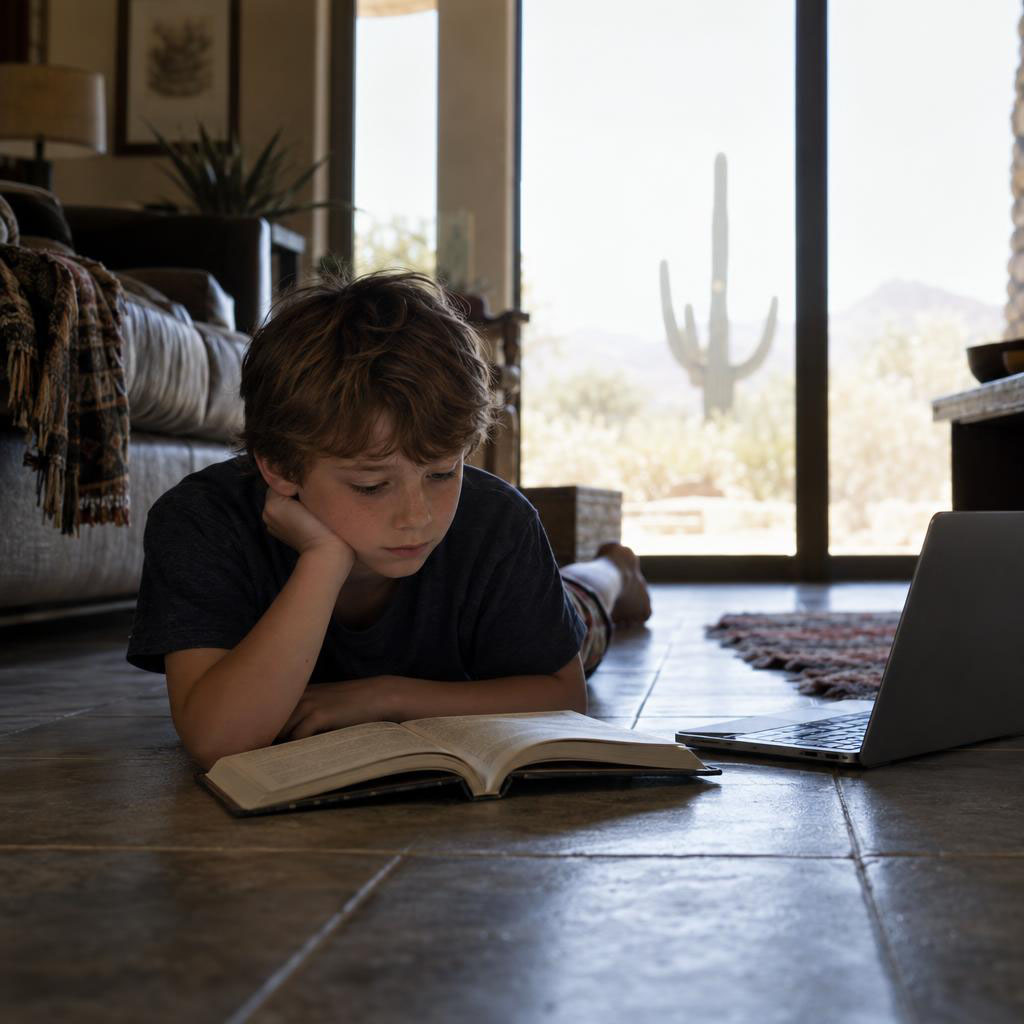
Online elementary school in Arizona: accredited options, how the universal ESA helps pay tuition, and what to look for when choosing a program for K-5.
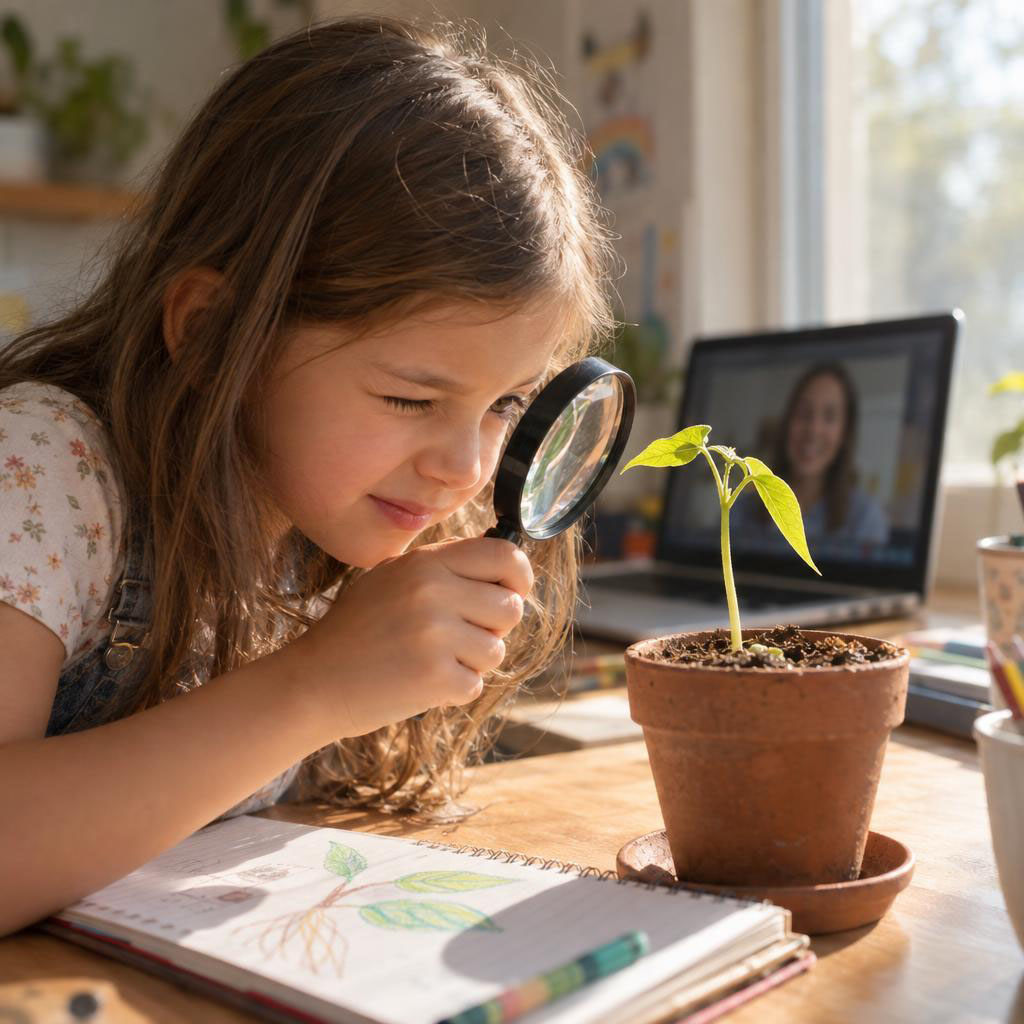
An online elementary school curriculum covers reading, math, science, and social studies across grades K-5. Here's what students learn and how it's taught.