+1 (561) 295-3504


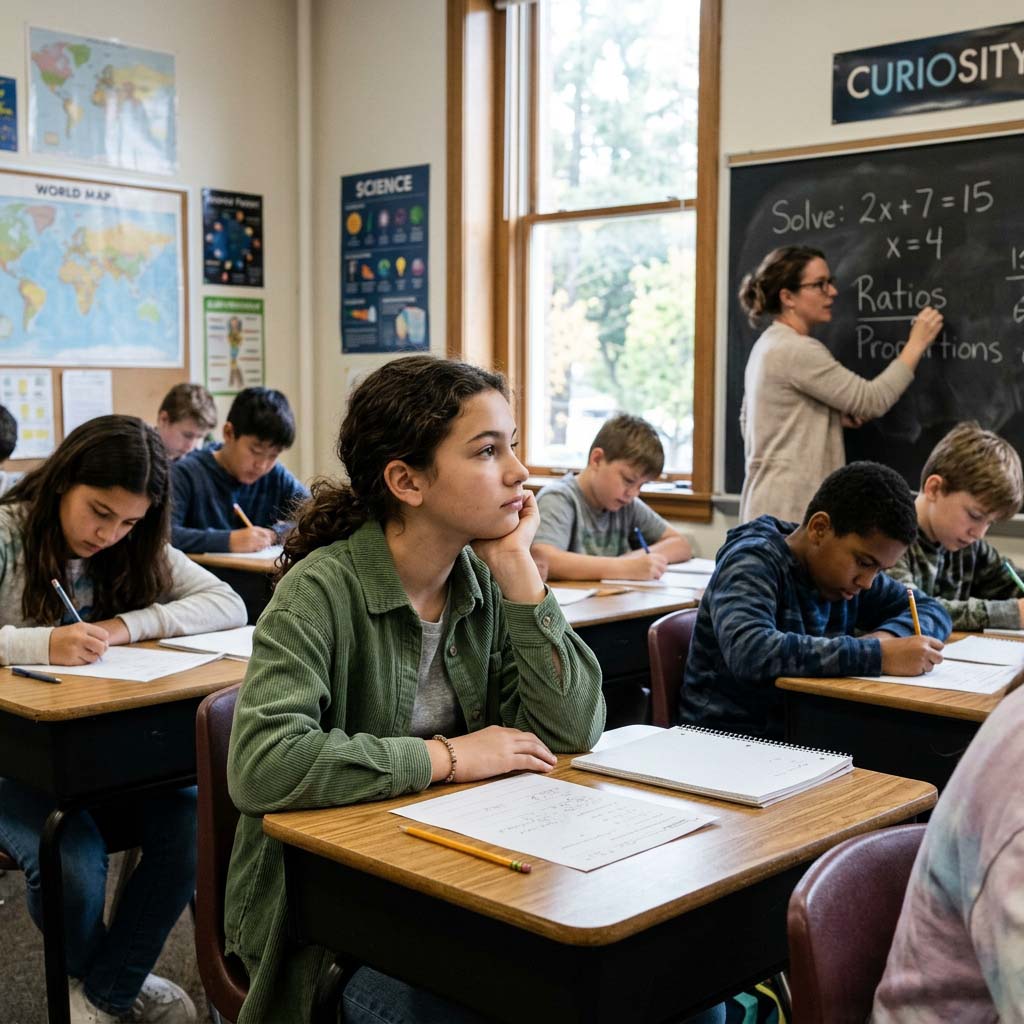
Online school offers gifted students the academic challenge and flexibility they often struggle to find in traditional classrooms. Rather than waiting for classmates to catch up or completing assignments they mastered years ago, gifted students in the right online environment can move at their own pace, explore subjects in depth, and receive instruction tailored to their abilities. For families watching a bright child become bored and disengaged, online private school represents a path toward rekindling their love of learning.
The mismatch between gifted students and traditional classrooms is well documented. Research shows that gifted children often arrive at school already knowing 40 to 60 percent of the content that will be covered that year. They spend significant time waiting: waiting for instruction, waiting for classmates to finish, waiting for material that actually challenges them. A systematic review published in Heliyon identified boredom, lack of acceleration opportunities, and curriculum mismatched to student needs as key school factors contributing to underachievement among gifted individuals. When capable students aren't adequately challenged, many disengage entirely and stop trying.
Picture a seventh grader who reads at a college level being assigned the same novel as everyone else, then asked to wait patiently while the class discusses vocabulary words she knew at age eight. Imagine a mathematically advanced student solving problems in seconds while the teacher works through the same concept for the third time. This is the daily reality for many gifted children.
Traditional schools face significant structural challenges in meeting gifted students' needs. Class sizes of 25 or 30 students make individualized instruction nearly impossible. Curriculum pacing follows the needs of the majority, not the few who grasp concepts immediately. Teachers stretched thin between struggling learners and advanced students often default to focusing on those who need the most help passing standardized tests. The result is that gifted students are frequently left to fend for themselves.
Over time, this lack of challenge produces troubling patterns. Some gifted students develop poor study habits because they never had to work hard to succeed. Others stop volunteering answers or asking questions to avoid standing out. Many experience what researchers call "doing poorly on purpose," deliberately underperforming to fit in socially. When learning stops feeling rewarding, motivation erodes. What could have been a source of joy becomes just another box to check.
Online private schools can address these problems in ways traditional classrooms cannot. Without the constraints of physical proximity and age-based grouping, students can access curriculum matched to their actual abilities rather than their birth year. A Grade 7 student ready for advanced algebra can take it. A high schooler fascinated by philosophy can explore it alongside core requirements. The flexibility isn't just scheduling; it's intellectual.
The structure of online learning also suits how many gifted students prefer to work. They can move quickly through material they've already mastered, spending their time on genuinely challenging content rather than review. When a concept proves difficult, they can slow down and explore it thoroughly without holding back an entire class. This self-pacing prevents both the boredom of moving too slowly and the frustration of being rushed through complex material.
At Score Academy Online, this flexibility comes with meaningful structure and support. Live, teacher-led classes ensure students engage with material actively rather than clicking through modules passively. With a maximum of six students per class, teachers can push each student appropriately, asking follow-up questions that deepen understanding rather than accepting surface-level answers. Every student receives an individualized education plan that considers their strengths, interests, and goals, creating a roadmap for challenge rather than a generic syllabus.
Class size matters tremendously for gifted students. In large classrooms, advanced learners often disappear. They answer questions correctly, cause no behavioral problems, and require little immediate attention. Teachers focused on managing 30 students naturally prioritize those who struggle most. The quiet gifted student in the back, bored but compliant, rarely receives the intellectual push they need.
Research from Tennessee's landmark Project STAR study demonstrated that smaller classes allow teachers to spend significantly more time on individualized instruction. Teachers come to know students personally and understand where each one stands in their learning. Problems get caught early, and opportunities for extension get recognized rather than missed. This matters for all students, but it matters especially for gifted learners whose needs are often overlooked in crowded classrooms.
Score Academy's six-student maximum ensures that every student receives genuine attention. Teachers can probe understanding, assign challenging extensions, and adjust instruction based on how individual students respond. A gifted student isn't left to coast along unchallenged because the teacher noticed someone else was struggling with fractions. Both students get what they need because there's actually time and space for both.
One often underappreciated risk for gifted students is arriving at advanced coursework without the study skills and resilience needed to succeed. When everything comes easily through elementary and middle school, students may never learn how to struggle productively with difficult material. The first genuinely challenging class, sometimes not until college, can feel devastating to students who've never had to work hard academically before.
An appropriately challenging online school environment addresses this by providing that productive struggle earlier. When gifted students encounter material that requires effort, they develop the persistence and learning strategies they'll need later. They learn that difficulty isn't a sign of failure but a normal part of deep learning. This happens best in an environment where teachers know students well enough to push them toward genuine challenge while providing support when frustration arises.
The individualized education plans at Score Academy serve this purpose directly. Rather than defaulting to whatever the average student needs, academic advisors work with families to identify appropriate levels of challenge. A student who excels in Grade 9 math might take honors coursework or accelerate into higher-level content. A student with strong writing skills might receive more demanding essay assignments while receiving extra support in a subject they find more difficult. The goal is appropriate challenge across the board, not just in areas of natural strength.
Gifted students often face unique social challenges in traditional schools. They may feel different from classmates, struggle to find peers who share their interests, or learn to hide their abilities to fit in. Some develop anxiety around academic performance or become perfectionists who avoid any risk of failure. The social environment of school can become a source of stress rather than support.
Online school offers a different social dynamic. Students connect with classmates based on shared intellectual interests rather than geographic proximity. The small class sizes at Score Academy mean students actually get to know their classmates over time, building relationships through academic collaboration and discussion. Without the social pressures of a large traditional school, many gifted students feel freer to be themselves and engage authentically with learning.
This doesn't mean online school eliminates the need for social connection. Families should ensure students have opportunities for friendship and community outside of academics. Many online school students participate in local activities, sports, arts programs, or community groups that provide the peer interaction they need. The difference is that school becomes primarily about learning, with social needs met in settings where students can choose communities that actually fit them.
For gifted students with their eyes on competitive colleges, the quality of their high school education matters significantly. Colleges want to see rigorous coursework and strong academic performance. They want transcripts from accredited institutions whose grading standards they can trust.
Score Academy Online holds Cognia accreditation, the same accreditation held by many traditional public and private schools. Transcripts carry the same weight with college admissions officers as those from any respected high school. For students who want to accelerate their learning or take on additional academic challenges, the individualized approach means their transcript can reflect that ambition rather than being limited by what a local school happened to offer.
High school students at Score Academy can build transcripts that demonstrate both challenge and success. Completing honors coursework, maintaining strong GPAs, and developing genuine depth in subjects they care about all contribute to college applications that stand out. The personalized attention students receive also means teachers know them well enough to write detailed, specific recommendation letters, an advantage many large-school students don't have.
Not every online school serves gifted students well. Self-paced programs without teacher interaction can leave students drifting, completing minimum requirements without genuine engagement. Large virtual schools with crowded classes replicate the problems of traditional classrooms in a different format. Generic curriculum that doesn't adapt to student ability misses the point entirely.
When evaluating options, families should ask about class sizes, teacher qualifications, and how curriculum gets adjusted for advanced learners. Understanding whether instruction happens live or through recorded modules matters enormously. So does knowing whether students receive individualized learning plans or simply follow the same path as everyone else.
Score Academy Online serves students in Grades 6-12, providing consistency through the critical middle school and high school years. For families with gifted children who need more challenge than traditional classrooms provide, it offers academic rigor, personalized attention, and the flexibility to learn appropriately rather than waiting for everyone else to catch up.
How does online school challenge gifted students more than traditional school? Online schools with small class sizes and individualized learning plans can match curriculum to actual student ability rather than grade-level averages. Students can move quickly through material they've mastered and spend more time on genuinely challenging content. Teachers in small classes can push students individually rather than teaching to the middle.
Can gifted students in online school still take advanced courses like honors or AP? Yes, many online private schools offer honors and advanced coursework. At Score Academy Online, individualized education plans ensure students have access to appropriate levels of challenge. The small class structure also means even standard courses can be taught at higher levels for students ready for more depth.
Won't gifted students miss out on socializing with peers in online school? Online school changes how students socialize rather than eliminating it. Small class sizes allow genuine relationship building with classmates who share academic interests. Many families find that meeting social needs through extracurricular activities, local groups, and community involvement provides better peer connections than traditional school, where gifted students often feel different from classmates.
How do colleges view transcripts from online schools for gifted students? Colleges evaluate transcripts from accredited online schools the same way they evaluate traditional high school transcripts. Cognia accreditation ensures Score Academy Online transcripts carry credibility with admissions offices. Gifted students who take appropriately challenging coursework and perform well can build competitive applications.
At what age should families consider online school for a gifted child? There's no universal answer, but many families make the transition when they notice their child is chronically bored, disengaged, or underperforming relative to ability. Middle school is a common transition point as academic demands increase and social dynamics become more complex. Score Academy serves students beginning in Grade 6.
How do individualized education plans work for gifted students? Individualized education plans consider each student's abilities, interests, and goals to create a tailored academic path. For gifted students, this means identifying appropriate levels of challenge, ensuring access to advanced content, and adjusting pacing to match how quickly they master material. Plans are developed collaboratively with families and reviewed regularly.
Learn what live online classes look like for K-12 students, how formats compare, why class size matters, and where to find a truly personalized option. Explore now.

Learn how self-paced online school works, who it fits best, and what accreditation and teacher involvement really mean before you choose a program.

Self-paced or live online school? This guide breaks down real differences, learning profiles, and how to find the right fit for your child. Start comparing now.