+1 (561) 295-3504



Twice-exceptional students, often called 2e learners, possess both remarkable intellectual gifts and learning differences that create a unique educational profile. These students might demonstrate advanced reasoning in mathematics while struggling with dyslexia, or show exceptional creativity alongside ADHD. Online school offers twice-exceptional students something traditional classrooms often cannot: an environment where teachers can simultaneously nurture their extraordinary abilities and provide support for their specific challenges, all within an individualized learning plan designed around who they actually are.
For parents who have watched their 2e child feel frustrated in settings that address only their disability or only their giftedness, online private school represents a fundamentally different approach to education.
The term twice-exceptional encompasses students who demonstrate high ability or giftedness in one or more areas while also having a disability or learning difference. Common combinations include giftedness paired with ADHD, autism spectrum disorder, dyslexia, dyscalculia, processing disorders, or anxiety. Research indicates that twice-exceptional students are among the most underidentified and underserved populations in schools, with studies finding that approximately 17% to 18% more students with disabilities should be identified for gifted programs based on their achievement levels (Reis et al., 2022).
The identification challenge stems from a phenomenon called masking. A student's giftedness may compensate for their learning disability, making both less visible. A brilliant child with dyslexia might use their strong reasoning skills to infer words they cannot decode, performing at grade level despite significant reading difficulties. Conversely, a learning disability might overshadow giftedness, leading teachers to focus only on what the student struggles with rather than recognizing their exceptional potential.
This masking effect means many 2e students end up in neither gifted programs nor special education, or they receive services for one exceptionality while the other goes unaddressed. The result is often frustration, underachievement, and a growing disconnect between what these students are capable of and what they actually produce in school.
Traditional school structures tend to separate students into categories: gifted, general education, or special education. The organizational logic makes sense for most students, but twice-exceptional learners do not fit neatly into any single category.
In a gifted program, a 2e student may struggle with aspects of the curriculum that interact with their disability. Without appropriate accommodations, they might appear to be failing despite their intellectual ability. In special education settings, the focus typically centers on remediating weaknesses rather than developing strengths. The student receives support for their challenges but may never encounter appropriately challenging material for their areas of giftedness. In general education, neither exceptionality receives adequate attention.
Large class sizes compound these problems. A teacher with 25 or 30 students cannot easily provide both the challenge a gifted student needs and the accommodations a student with learning differences requires. The administrative logistics of coordinating between gifted services and special education services often fall to parents, who find themselves constantly advocating for their child's complex needs.
Online private schools can offer twice-exceptional students what they need most: genuine individualization that addresses the whole student rather than just one aspect of who they are.
At Score Academy Online, every student receives an individualized education plan developed with their family. For a twice-exceptional student, this plan can incorporate strategies for both developing gifts and supporting challenges. The flexibility inherent in online learning allows for accommodations that would be difficult to implement in traditional settings.
Consider how scheduling flexibility might work for a 2e student with ADHD. Live classes happen at scheduled times, providing structure and real teacher interaction. But if a particular day proves difficult, recorded lessons allow the student to review material when their focus is sharper. Small class sizes of no more than six students mean teachers can adjust pacing and provide individualized attention without the student feeling singled out.
The environment itself matters too. Many 2e students are sensitive to sensory input or find the social dynamics of crowded classrooms overwhelming. Learning from home eliminates many environmental stressors, allowing students to focus their cognitive resources on learning rather than on managing their surroundings.
The core principle of twice-exceptional education involves addressing both exceptionalities simultaneously. A student should not have to wait until their learning disability is remediated before accessing appropriately challenging content for their areas of strength. In fact, research suggests that focusing on strengths can improve outcomes across the board, increasing motivation, self-esteem, and engagement with learning.
Online schools can implement this principle through curriculum flexibility. Let's say a seventh grader demonstrates exceptional mathematical reasoning but has significant difficulties with written expression. In a rigid traditional setting, this student might be held to grade-level math while receiving remediation for writing, never accessing the advanced mathematical content that would engage their abilities.
In an online private school with individualized planning, the same student might accelerate through math while receiving modified expectations for written output in other subjects. They might demonstrate learning through recorded oral explanations rather than essays, or receive extended time and organizational support for writing tasks. The goal becomes helping the student show what they know rather than having their disability determine what they can access.
The difference between theoretical personalization and practical personalization often comes down to class size. A teacher with 30 students cannot realistically know each one's specific profile of strengths and challenges. A teacher with six students can.
Score Academy Online maintains this small class size specifically because it enables the kind of attention that complex learners require. Teachers can learn how each student thinks, what engages them, what frustrates them, and what accommodations help them succeed. When a teacher notices that a particular student processes information more slowly but arrives at sophisticated conclusions, they can adjust expectations accordingly without making the student feel different from peers.
For twice-exceptional students, this relationship with teachers often matters more than any specific accommodation. Feeling understood and valued despite their differences reduces the anxiety that frequently accompanies 2e profiles. Knowing that their teacher will not interpret their learning differences as laziness or lack of effort allows these students to take intellectual risks they might avoid in less supportive environments.
Parents of 2e students often worry about social development in online settings. Traditional schools provide daily peer interaction, after all, even if those interactions are not always positive for students who feel different from their classmates.
Online school offers a different kind of social experience. Small, consistent class groups allow students to build relationships with the same peers over time. The structure of online interaction can actually be easier for some 2e students, particularly those with autism spectrum disorder or social anxiety. Scheduled class discussions with clear expectations for participation differ significantly from the unstructured social chaos of hallways and cafeterias.
Many 2e students also benefit from having social energy to spare after school hours. When learning itself does not drain every resource they have, they can pursue activities and friendships outside of academics. A student whose giftedness lies in music, art, or technology can invest time in those areas while maintaining their academic progress through flexible online schooling.
Parents of twice-exceptional students understand the importance of keeping future options open. A 2e student might eventually attend a competitive university, pursue specialized training, or take any number of paths that require legitimate academic credentials.
Accreditation matters for this reason. Score Academy Online holds Cognia accreditation and NCAA approval, meaning credits transfer and colleges recognize the diploma. For 2e students who may have experienced disrupted education or unconventional academic paths, accreditation provides assurance that their work counts.
The NCAA approval particularly matters for 2e student athletes. Some twice-exceptional students channel their intensity into competitive sports, and maintaining eligibility requires coursework from approved institutions. Online school allows these students to balance training with academics while meeting NCAA requirements.
Not every online school will serve twice-exceptional students well. When evaluating options, parents should ask pointed questions about class sizes, teacher qualifications, individualization practices, and experience with 2e learners specifically.
Ask how the school handles students who need both challenge and support. Listen for answers that reflect understanding of twice-exceptionality rather than confusion about the concept. A school that truly serves 2e students will not seem surprised by the question.
Consider whether the school offers genuine flexibility or merely self-paced modules. Twice-exceptional students often need structure as well as flexibility. Live instruction with real teachers provides accountability and engagement that purely asynchronous programs may lack. The combination of scheduled live classes and individualized pacing that accommodates their needs often works best.
Score Academy Online serves students in grades 6 through 12, providing Cognia-accredited education with small class sizes and individualized planning. For twice-exceptional students who have not fit comfortably into traditional settings, this approach offers an alternative worth exploring.
Moving a twice-exceptional student to online school represents a significant change. The transition typically works best when families communicate openly with the new school about their student's profile, including both strengths and challenges.
Bring documentation from previous evaluations, share what has worked and what has not in past educational settings, and be specific about the accommodations that help your student succeed. Schools that genuinely serve 2e students will welcome this information rather than seeming overwhelmed by it.
Expect an adjustment period. Students who have experienced frustration in traditional settings may need time to trust that this environment will be different. Small early successes build confidence, and many 2e students find that online school allows them to feel competent in ways they have not experienced before.
What makes a student twice-exceptional? Twice-exceptional students demonstrate high ability or giftedness in one or more areas while also having a disability or learning difference such as ADHD, autism spectrum disorder, dyslexia, or a processing disorder. The combination creates a unique profile where strengths and challenges coexist, often masking each other and making identification difficult.
How do online schools accommodate twice-exceptional students? Quality online schools can provide individualized education plans that address both giftedness and learning challenges. Small class sizes allow teachers to know each student's profile, and the flexibility of online learning permits accommodations like modified assignments, extended time, or alternative ways of demonstrating knowledge.
Will my twice-exceptional child be challenged academically in online school? In online schools with small classes and individualized planning, 2e students can access appropriately challenging content in their areas of strength while receiving support for areas of difficulty. This differs from settings where disabilities limit access to advanced material or where gifted programs lack accommodation for learning differences.
Is online school socially appropriate for 2e students? Many twice-exceptional students actually find online social interaction easier than traditional school environments. Small, consistent class groups allow for relationship building without the overwhelming stimulation of crowded schools. Students often have more energy for social activities outside of school when learning itself is less draining.
How do colleges view transcripts from online private schools? Colleges recognize transcripts from accredited online schools just as they do transcripts from traditional schools. Cognia accreditation specifically indicates that a school meets rigorous quality standards. Many 2e students have successfully transitioned from online school to competitive universities.
What if my child needs to return to traditional school later? Credits from accredited online schools transfer to traditional schools. If circumstances change or a student's needs evolve, the academic work completed at Score Academy Online would count toward graduation requirements at other institutions.
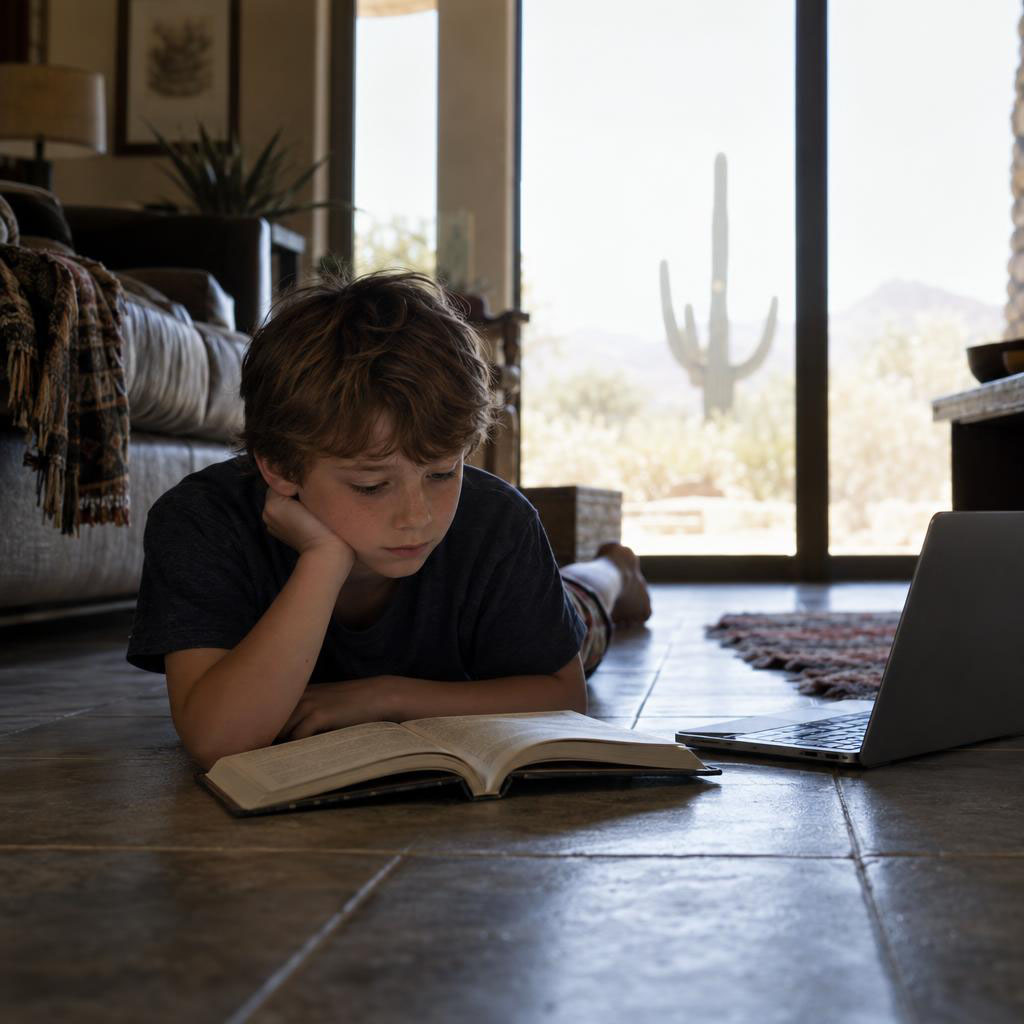
Online elementary school in Arizona: accredited options, how the universal ESA helps pay tuition, and what to look for when choosing a program for K-5.

An online elementary school curriculum covers reading, math, science, and social studies across grades K-5. Here's what students learn and how it's taught.
Learn what live online classes look like for K-12 students, how formats compare, why class size matters, and where to find a truly personalized option. Explore now.