+1 (561) 295-3504


Families seeking alternatives to traditional public education often weigh online school vs private school as their primary options. Both represent significant investments in a student's future, though they deliver education through fundamentally different models. Premium online schools offer small class sizes, certified teachers, and accredited curricula delivered through live virtual instruction. Traditional private schools provide in-person learning environments with campus facilities, extracurricular programs, and established social communities. Understanding how these options compare helps families choose the approach that best serves their specific circumstances and educational goals.
Class size varies dramatically between these educational models, and this difference shapes every aspect of the learning experience. Traditional private schools typically maintain smaller classes than public schools, often ranging from 15 to 20 students per classroom. While this represents an improvement over public school averages of 21 to 23 students, many families seek even more individualized attention.
Score Academy Online limits classes to six students maximum, creating an instructional environment that few private schools can match. This ratio fundamentally changes how teachers interact with students. In a class of six, every student participates in every discussion. Teachers notice when a student struggles with a concept and can address confusion immediately rather than discovering gaps during assessments weeks later.
The research on class size consistently demonstrates benefits from smaller learning environments. A Campbell Systematic Review examining 148 reports found positive effects of class size reduction on reading achievement, with smaller classes showing particular benefits for struggling students (Filges et al., 2018). The landmark Tennessee STAR study found that students randomly assigned to smaller classes outperformed peers in larger classrooms, with effects most pronounced for disadvantaged students and early grades.
While private schools offer improved student-to-teacher ratios compared to public schools, the difference between 18 students per class and 6 students per class represents a qualitatively different educational experience.
Beyond raw class size numbers, the quality of individual attention differs significantly between these options. Private schools pride themselves on knowing students as individuals, and many deliver on this promise effectively. Students at quality private schools often develop meaningful relationships with teachers and receive guidance that public schools cannot provide.
However, structural limitations constrain even excellent private school teachers. With 18 students to manage across multiple classes daily, opportunities for true individualization remain limited. Teachers may know each student's name and general strengths, but developing and implementing personalized learning plans for each student typically exceeds what the structure permits.
Score Academy Online develops an individualized education plan for every student enrolled, not just those with documented learning differences. Teachers trained in differentiation implement these plans within daily instruction, adjusting approach based on continuous observation of each student's response to instruction. The small class environment makes this systematic individualization practical rather than aspirational.
Consider a student who grasps mathematical concepts quickly but struggles with reading comprehension. In a private school classroom of 18 students with varying needs, the teacher must balance attention across all students while covering required material. In a class of six, the teacher can provide immediate extension activities for the mathematically advanced student while offering additional reading support without disrupting instructional flow.
Both online private schools and traditional private schools require significant financial investment. Traditional private day school tuition typically ranges from $15,000 to over $40,000 annually depending on location, reputation, and grade level. Boarding schools often exceed $60,000 per year when including room and board.
Score Academy Online's approximately $15,000 annual tuition positions it competitively within the private school market while delivering class sizes that most traditional private schools cannot match. Families receive certified teachers, live instruction, Cognia accreditation, NCAA approval, and individualized education plans at costs comparable to or below many day school options.
Beyond direct tuition, families should consider additional costs associated with each model. Traditional private schools often require uniforms, transportation, meals, and fees for extracurricular activities. These expenses can add several thousand dollars annually to the base tuition. Online school eliminates most of these costs while adding considerations for home internet and workspace setup.
The cost-per-student attention ratio deserves consideration as well. Paying $25,000 for a private school education delivered in classes of 20 students represents different value than paying $15,000 for education delivered in classes of 6 students. The smaller class size means proportionally more of the tuition investment translates directly into personalized instruction for your specific student.
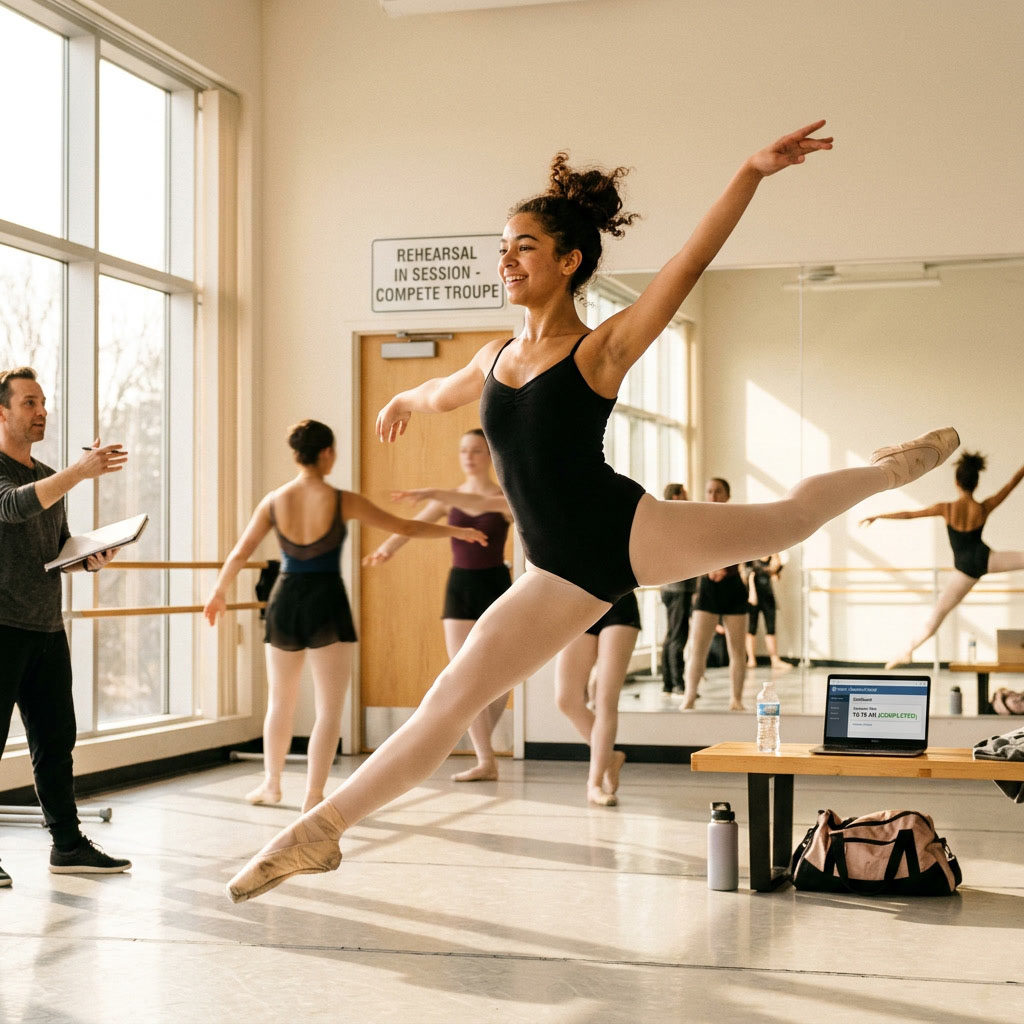
Traditional private schools operate on fixed schedules requiring physical presence during specific hours. This structure provides accountability and routine that many students need. However, it creates challenges for families with non-traditional circumstances. Student athletes with demanding training schedules, performers with rehearsal conflicts, students managing health conditions, or families who travel frequently may struggle to meet rigid attendance requirements.
Online schools offer varying degrees of scheduling flexibility. Score Academy Online maintains structured live class schedules that provide accountability while eliminating commute time and geographic constraints. Students attend classes from anywhere with reliable internet access, whether that's home, a grandparent's house during extended visits, or a hotel during family travel.
This flexibility proves particularly valuable for student athletes pursuing competitive careers. Training schedules that conflict with traditional school hours become manageable when classes happen online. Students can complete morning training, attend live classes in the afternoon, and maintain rigorous academic standards without sacrificing athletic development.
Families should honestly assess their student's needs when evaluating flexibility. Some students thrive with the structure and social immersion of daily campus attendance. Others perform better with the reduced transitions and individualized environment that online school provides.
Both premium online schools and traditional private schools can provide excellent college preparation, though approaches differ. Traditional private schools often emphasize extensive Advanced Placement offerings, competitive academic cultures, and established relationships with selective colleges. Name recognition of prestigious private schools may provide advantages in the application process.
Accredited online schools provide equally rigorous academic programs with different structural advantages. Score Academy Online's Cognia accreditation ensures curriculum quality meets recognized national standards. Transcripts carry full academic weight with colleges and universities. The school's NCAA approval confirms that student athletes can trust their coursework satisfies eligibility requirements.
A Harvard-led longitudinal study examining over 12,000 students found little difference in long-term outcomes between private independent schools and public schools when controlling for family background factors (Chen et al., 2021). The research suggests that school type matters less than previously assumed, with educational quality and student-school fit being more important than whether learning happens in a traditional private school building.
This finding should encourage families to focus on which educational environment best serves their specific student rather than assuming traditional private schools automatically provide superior outcomes. A student who thrives with individual attention and struggles in competitive group environments may achieve better results in a small online class than in a prestigious private school with larger class sizes.
Critics of online education frequently cite socialization concerns. Traditional private schools provide daily in-person interaction with peers, structured extracurricular activities, and social communities that can create lifelong friendships and professional networks.
These benefits are real and meaningful. Students at quality private schools often develop deep friendships, learn to navigate complex social situations, and benefit from alumni networks throughout their careers. For students who thrive in social environments and draw energy from peer interaction, traditional private schools offer advantages that online education cannot fully replicate.
However, the socialization question deserves nuanced examination. Private school social environments can be intensely competitive and sometimes exclusionary. Students who do not fit the dominant culture may experience stress rather than flourishing. For these students, the daily social pressure of traditional school environments may actually hinder development.
Online schools approach socialization differently. Score Academy Online's live classes create small learning communities where students interact daily with classmates and teachers. The intimate setting means every student participates in discussions rather than remaining anonymous. Students develop communication skills, collaborate on projects, and form genuine connections with peers who share similar academic experiences.
Families choosing online school typically supplement school-based interaction with community activities, sports teams, religious organizations, or neighborhood friendships. Many families find that intentionally structured socialization through selected activities produces better outcomes than the uncontrolled social environment of any school setting.
Traditional private schools require proximity to campus. Families must live within commuting distance, limiting options to schools in their geographic area. In regions with few quality private schools, families may have no acceptable traditional options regardless of their ability to pay tuition.
Online schools eliminate geographic barriers entirely. Families in rural areas with no private schools gain access to quality education previously available only in major metropolitan areas. Families who move frequently for work can maintain educational continuity without disruption. Students can access specialized instruction that their local area simply does not offer.
This geographic flexibility also affects the peer community. Traditional private school classmates come exclusively from the local area. Online school classmates may come from across the country or even internationally, exposing students to diverse perspectives and experiences that homogeneous local communities cannot provide.
The decision between online school and traditional private school depends on the individual student, family circumstances, and educational priorities. Traditional private schools may be the better choice for students who thrive in social environments and draw energy from peer interaction, need the structure of daily campus attendance, excel in competitive academic cultures, benefit from extensive extracurricular offerings, and value established alumni networks.
Online schools may be the better choice for students who need more individual attention than traditional classrooms provide, have scheduling conflicts with standard school hours, perform better with reduced social pressure and transitions, are pursuing competitive athletics or arts that require flexible scheduling, or live in areas without quality private school options.
Neither option is inherently superior. The key is matching the educational environment to the specific student's needs rather than assuming one model works for everyone.
Is online school as academically rigorous as private school? Quality varies in both settings. Accredited online schools like Score Academy Online maintain rigorous standards comparable to strong private schools. The key is evaluating specific programs rather than making assumptions based on format.
How do class sizes compare? Traditional private schools typically range from 15 to 20 students per class. Score Academy Online limits classes to six students maximum, providing dramatically more individual attention.
Which option provides better college preparation? Both can provide excellent college preparation. Accredited online schools produce transcripts that colleges recognize. The best choice depends on which environment helps the specific student achieve their academic potential.
What about extracurricular activities? Traditional private schools offer extensive on-campus extracurriculars. Online school students typically participate in community-based activities, club teams, or other organizations outside of school hours.
How does the cost compare? Traditional private day schools typically cost $15,000 to $40,000 or more annually. Score Academy Online's approximately $15,000 tuition provides smaller classes than most private schools at competitive pricing.
Can student athletes maintain NCAA eligibility through online school? NCAA-approved online schools like Score Academy Online satisfy core course requirements. Student athletes should verify that any school they consider holds appropriate NCAA approval.
Learn what live online classes look like for K-12 students, how formats compare, why class size matters, and where to find a truly personalized option. Explore now.

Learn how self-paced online school works, who it fits best, and what accreditation and teacher involvement really mean before you choose a program.
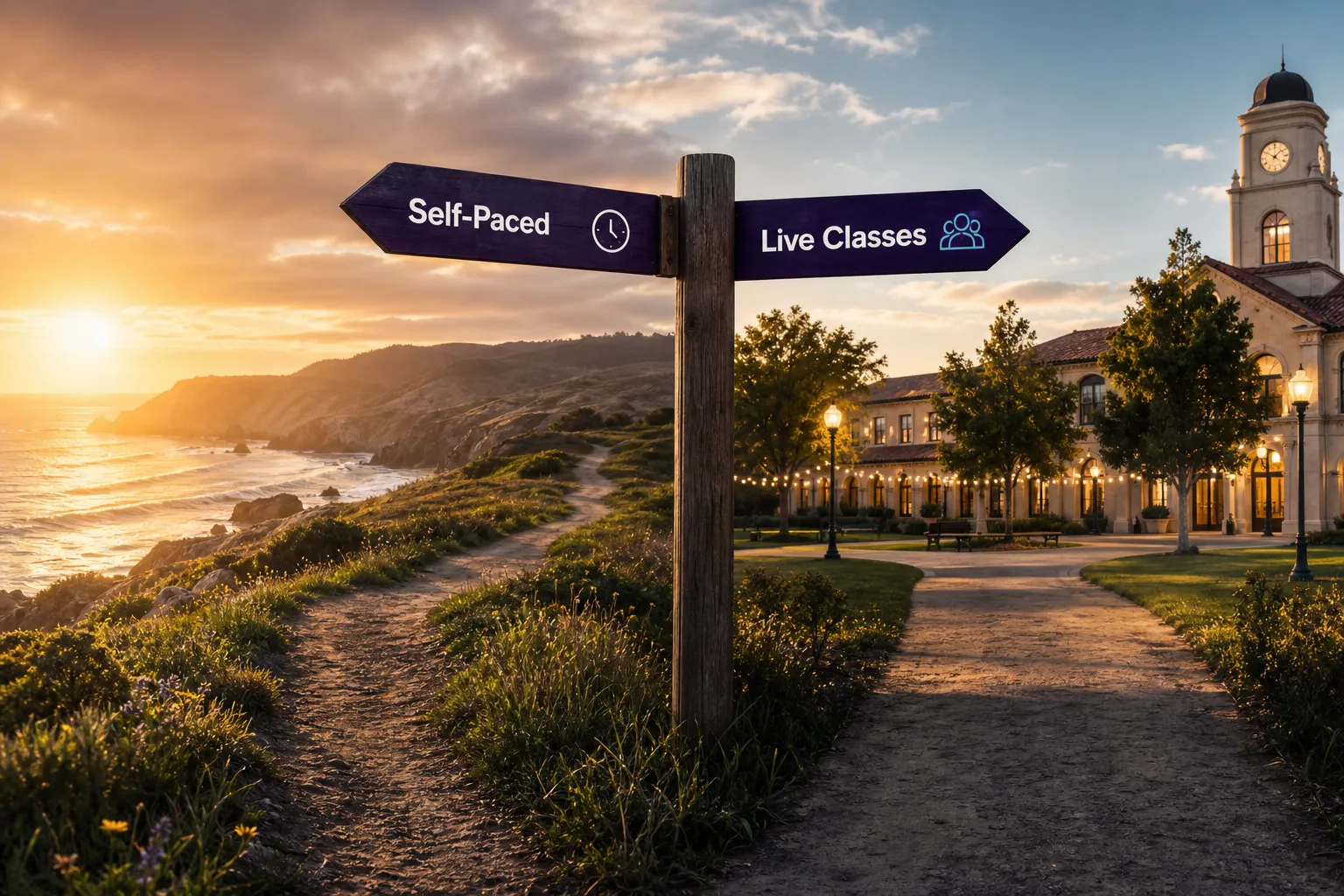
Self-paced or live online school? This guide breaks down real differences, learning profiles, and how to find the right fit for your child. Start comparing now.