+1 (561) 295-3504


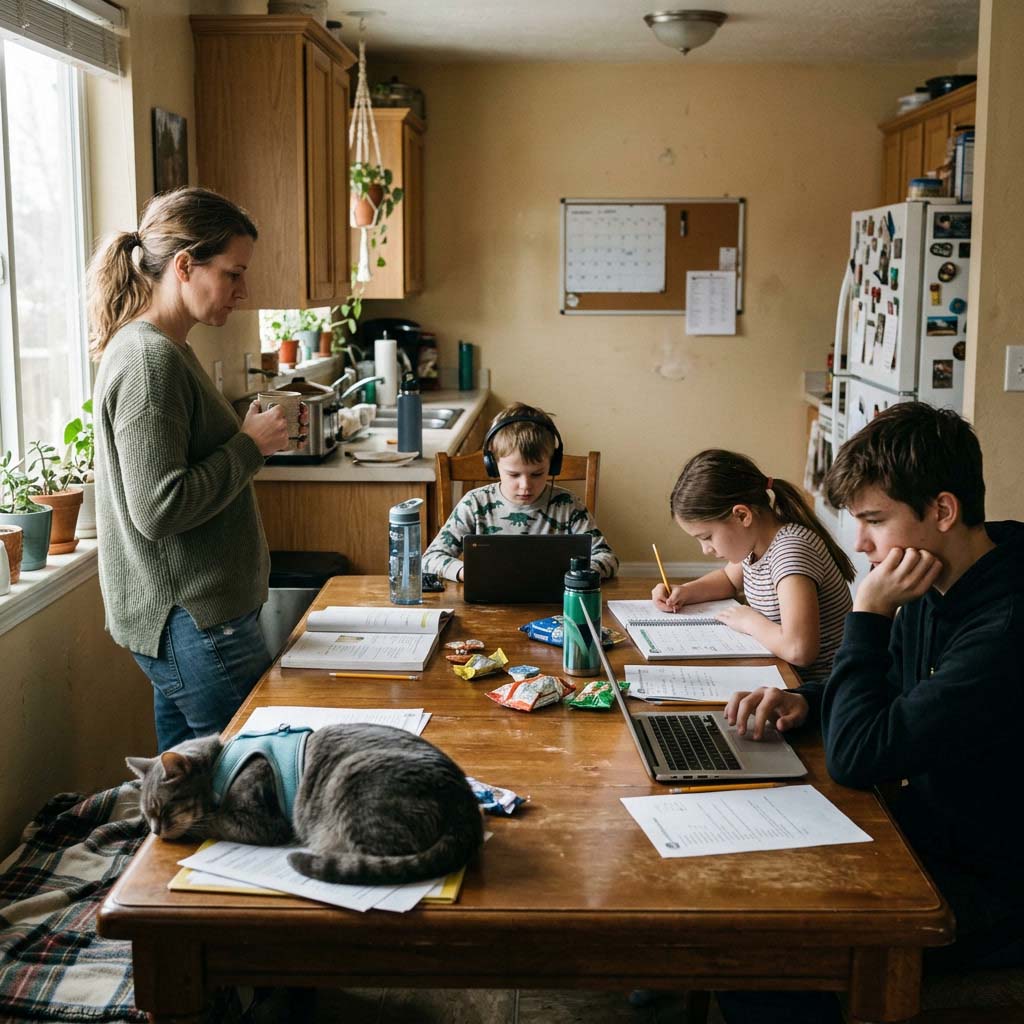
The Utah Fits All Scholarship is a universal education savings account program that gives Utah K-12 families up to $8,000 per student to spend on private school tuition, tutoring, curriculum, online classes, and other approved education expenses. Home-based students receive $4,000 if they are ages 5 to 11 and $6,000 if they are ages 12 to 18. Signed into law in 2023 and launched for 2024-25, the program is administered by Odyssey and funded at $120 million for the 2026-27 school year. The 2026-27 application window has closed, but understanding how the scholarship works helps families plan ahead.
Here is who qualifies, how much you receive, what the account can buy, and how to apply.
Any K-12 student who is a resident of Utah may apply, regardless of household income or current school. Children of active-duty military members stationed in or out of Utah can also qualify under the residency rules. A student cannot hold the scholarship while enrolled full-time in a public school, unless the class itself is paid for by the scholarship, so accepting an award generally means opting out of public school for funding purposes.
Award amounts depend on the path a family chooses. Students attending a private school receive up to $8,000. Home-based students ages 5 to 11 receive $4,000, and those ages 12 to 18 receive $6,000. Because the program is funded by a fixed appropriation, awards are prioritized when applications exceed available dollars, with renewing recipients holding first priority. The program has grown fast, drawing more than 23,000 applications in a single recent year, and it survived a legal challenge, with the Utah Supreme Court allowing it to continue operating while the case proceeds.
Funding also grew alongside demand, from $80 million in the program's first year to $120 million for 2026-27, which lets thousands more students take part. Within each preference category, awards are distributed on a first-come basis, so families who prepare documents ahead of time and apply on the opening day give themselves the best chance. Because the account can be spent across many providers, some families combine a private school or online program with a tutor and a curriculum package, building a plan around the child rather than around a single institution.
The Utah Fits All Scholarship is one of the more flexible programs in the country. Approved uses include private school tuition and fees, tutoring, testing fees, individual classes and activities, curriculum and educational materials, educational software, extracurricular opportunities, and therapies for students with disabilities. Online classes qualify too, and families purchase from approved vendors through the Odyssey portal.
Several limits are worth noting. Legislation capped extracurricular spending at 20 percent of a student's account and physical education spending at 20 percent as well. A participant also cannot hold a Carson Smith Scholarship at the same time. Up to two-thirds of unspent funds can carry forward, which lets careful planners save toward a larger purchase like a full curriculum set the following year. Beginning with the 2026-27 school year, scholarship students may take part in public school athletics and extracurricular activities on the same terms as home school or private school students, which widens what a family can build around the account.
Odyssey took over as program administrator in 2025 and handles applications, fund management, and vendor purchases.
Step 1: Create an Odyssey account. Use the email address you want for all scholarship communication, and confirm it when Odyssey emails you.
Step 2: Choose your student's path. Applicants select either private-school or home-based status, and that choice cannot be swapped later within the same application.
Step 3: Gather and upload documents. Plan on proof of Utah residency, your child's birth certificate, Social Security numbers for parent and student, and income documentation if you are seeking a priority category. Income is verified through the Utah State Tax Commission, so accurate personal information matters.
Step 4: Watch for your decision. Renewing families complete a portfolio describing the student's learning for the year. Missing the window means waiting for the next cycle, so mark the spring dates when they are announced.
An account this open puts the student in the driver's seat, and self-directed learning rewards students who can plan, monitor, and stick with their work. A study by Ha, Roehrig, and Zhang (2023) analyzed more than 7,000 sixth graders and found that students' metacognition and effort regulation, two core self-regulated learning skills, positively predicted both their reading and math achievement. The practical lesson for families building a custom program is that flexibility works best with structure. Pairing a coherent curriculum or a live class with regular check-ins gives a child the scaffolding that helps those self-regulation skills develop, rather than leaving a student to manage a patchwork alone.
Score Academy Online is a Cognia-accredited, NCAA-approved online private school serving grades K-12, with live certified teachers, individualized education plans, and synchronous classes capped at six students in middle and high school and four in elementary. The K-12 curriculum page shows how the full program is organized, and the accreditation page documents the school's credentials.
Because Utah Fits All purchases run through Odyssey's approved-vendor system, families should confirm the current provider list with Odyssey before directing funds; Score Academy Online is pursuing approved-provider status across active school choice states, and it is already an approved provider for the Arizona ESA in a neighboring state. The school's per-course tuition runs from $415 for self-paced elementary courses to $2,500 for live small-group high school courses, so an $8,000 award could fund a full self-paced load with room for tutoring, or a substantial share of a live schedule. Home-based families can use the online elementary school to anchor a wider plan, rolling enrollment lets students start any time, and the school choice hub compares Utah's program with options elsewhere.
Program rules, award amounts, and timelines change. Confirm current requirements with the Utah State Board of Education and Odyssey before making final enrollment decisions.
How much is the Utah Fits All Scholarship? Awards depend on the path chosen:
Is there an income limit? No. Every K-12 Utah resident is eligible regardless of income. When applications exceed funding, renewing recipients and other priority groups are funded first.
Who runs the program? Odyssey administers the Utah Fits All Scholarship, handling applications, fund management, and approved vendor purchases through its online portal.
Can I use the scholarship for online classes? Yes. Online classes from approved vendors are a qualifying expense, purchased through the Odyssey portal alongside curriculum, tutoring, and materials.
Do unused funds roll over? Up to two-thirds of unspent funds can carry forward to the following year, which lets families save toward larger purchases.
When can I apply? The 2026-27 window has closed. Applications typically open in spring, with renewals first and new applicants shortly after, so prepare documents ahead of the next cycle.

Online elementary school in Arizona: accredited options, how the universal ESA helps pay tuition, and what to look for when choosing a program for K-5.

An online elementary school curriculum covers reading, math, science, and social studies across grades K-5. Here's what students learn and how it's taught.
Learn what live online classes look like for K-12 students, how formats compare, why class size matters, and where to find a truly personalized option. Explore now.