+1 (561) 295-3504


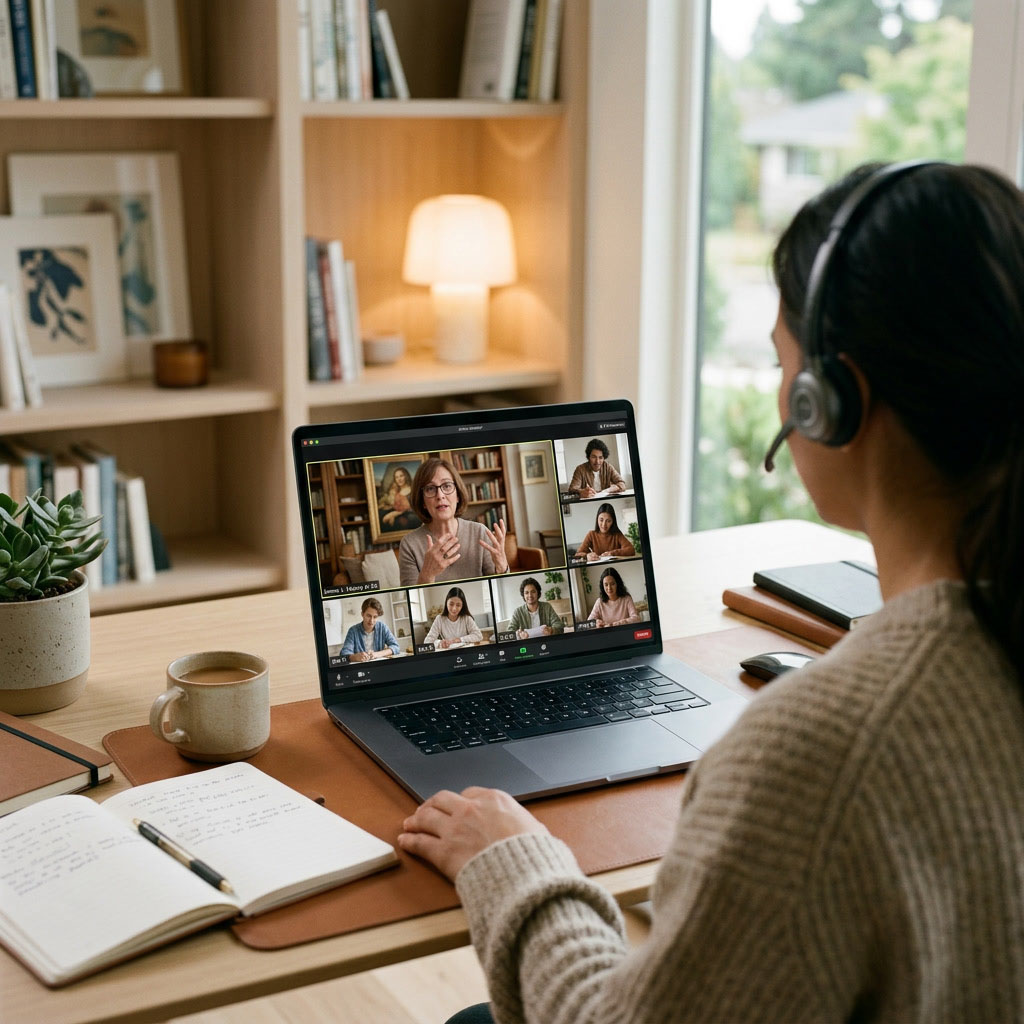
Is online school right for your child? The answer depends on your student's learning style, family circumstances, and the specific online school you're considering. Students who thrive in online environments typically demonstrate self-motivation, comfort with technology, and either a need for scheduling flexibility or a preference for more individualized instruction than traditional classrooms provide. However, the quality of the online school matters enormously. Premium online schools with small class sizes and live instruction can serve students who might struggle in self-paced programs. Understanding which factors predict success helps families make informed decisions about whether virtual learning represents the right path.
Research on online learning consistently identifies certain student characteristics associated with positive outcomes. A comprehensive scoping review examining virtual learning environments found that successful online students typically possess motivation, self-regulation, perceived usefulness of the format, confidence with technology, strong communication skills, and critical thinking competence (Caprara & Caprara, 2021). However, the review also emphasized that readiness for online learning involves more than academic preparation. Students benefit from social-emotional maturity, resilience, flexibility, and positivity when transitioning from traditional classroom routines to virtual learning environments.
These findings should encourage parents rather than discourage them. While some students naturally possess these characteristics, others can develop them with proper support. The key insight from research is that the online school's structure and support systems matter as much as the student's initial readiness. Schools that provide robust teacher interaction, clear expectations, and consistent accountability help students develop the self-regulation skills that predict long-term success.
Score Academy Online addresses readiness concerns through its live, teacher-led model. Rather than requiring students to navigate asynchronous content independently, the school provides daily synchronous instruction where teachers actively engage with students in real time. This structure supports students who may not yet have developed the independent learning skills that purely self-paced programs demand.
Certain circumstances and characteristics suggest a student might flourish in a virtual learning environment. Consider whether your child demonstrates any of the following patterns.
Your child may benefit from online school if traditional classroom pacing frustrates them, whether moving too quickly or too slowly. Students who grasp concepts rapidly often feel held back waiting for classmates, while students who need additional processing time may feel rushed and anxious. Online schools with individualized education plans can adjust pacing to match each student's needs.
Students who experience social anxiety, bullying, or difficulty navigating complex social dynamics at traditional schools often find relief in online environments. The reduced social pressure allows them to focus on academics while still developing communication skills through class discussions and group projects. Research indicates that students who report lower happiness at school often prefer online learning, which can protect them from social pressures they find overwhelming.
Athletes, performers, and students with demanding extracurricular commitments frequently struggle to balance their pursuits with rigid school schedules. Online school provides flexibility that allows students to maintain rigorous training or performance schedules without sacrificing academic quality.
Students with chronic health conditions that cause frequent absences may fall behind in traditional schools despite strong academic ability. Online school eliminates the attendance complications that illness creates while providing consistent access to instruction.
Families who relocate frequently, including military families and those with traveling careers, find that online school provides educational continuity that changing schools repeatedly cannot match.
Honest assessment requires acknowledging when online school may not represent the best choice. Some students genuinely thrive in traditional environments, and forcing a poor fit serves no one.
Students who draw significant energy from in-person social interaction throughout the day may find online learning isolating despite efforts to build virtual community. While online schools provide opportunities for interaction, the experience differs qualitatively from daily in-person contact with dozens of peers.
Younger students or those who struggle significantly with executive function may need the external structure that physical school provides. The accountability of being physically present in a classroom with a teacher monitoring attention can support students who have not yet developed internal self-regulation skills.
Students who require extensive hands-on learning experiences, particularly in subjects like laboratory sciences or performing arts, may find that online delivery limits certain types of engagement. Quality online schools address this through virtual labs, at-home experiments, and creative adaptations, but the experience differs from daily access to physical facilities and equipment.
Families where parents work outside the home and cannot provide any daytime supervision should carefully consider logistics. While online school students do not require constant parental involvement during classes, having an adult available for support, especially for younger students, improves outcomes.
Perhaps the most crucial insight for parents considering online education is that the quality variation between online schools far exceeds the variation between traditional schools. A poorly designed self-paced program with minimal teacher contact creates an entirely different experience than a well-structured live instruction model with small classes and individualized support.
Research consistently shows that synchronous components where students interact with teachers in real time improve engagement, motivation, and outcomes. Studies find that live video discussions structured similarly to in-person classes receive high effectiveness ratings from students. The visual presence of a teacher, the ability to ask questions immediately, and the accountability of scheduled class times all contribute to success.
Score Academy Online's model reflects these research findings. Classes of no more than six students meet live with certified teachers, creating the interactive environment that research identifies as optimal. This differs fundamentally from online schools that rely primarily on recorded lectures, discussion boards, or self-paced modules with minimal live instruction.
Cognia accreditation provides external verification of academic quality. Accredited schools meet recognized standards for curriculum, instruction, and student support. When evaluating online schools, accreditation should be a baseline requirement rather than a bonus feature.
Before enrolling, families should thoughtfully assess both the student's needs and the school's offerings. Consider asking yourself and the school these questions.
Does the school offer live instruction or primarily self-paced content? How many students are in each class? What credentials do the teachers hold? How does the school handle students who fall behind or struggle with material? What support services exist beyond academic instruction?
For your student, consider: How does my child respond to independent work? What does my child say about their current school experience? What specific problems am I hoping online school will solve? Is my child willing to try this approach, or am I imposing a decision they resist?
Research on student satisfaction with online learning found that happiness at home positively predicted satisfaction with online education, while unhappiness at home predicted lower satisfaction and perceived effectiveness. This suggests that family dynamics and home environment matter for online learning success. Families should honestly assess whether their home provides a supportive learning environment.
Parents play a different but equally important role in online school compared to traditional education. Rather than helping with homework after school, parents of online students often provide logistical support during the school day, ensure students attend classes, and communicate with teachers about progress.
Research indicates that students whose families remained socially connected to other students' families demonstrated higher engagement in online learning. Parents can facilitate these connections through virtual study groups, coordinating extracurricular activities with classmates, or simply encouraging their student to build relationships with online peers.
Score Academy Online's approach involves parents as partners in education. The small class sizes mean teachers know each student individually and can communicate meaningfully with families about progress. This differs from large online programs where students may feel anonymous and parents struggle to identify appropriate points of contact.
If assessment suggests online school represents a good fit, thoughtful transition planning increases the likelihood of success. Students benefit from understanding what to expect before classes begin, including the technology platforms, daily schedule, and communication expectations.
Research on online learning readiness emphasizes that students need technological proficiency, the ability to access online resources, comfort participating in online discussions, and skills for completing digital assignments. Schools that provide orientation programs and ongoing technical support help students develop these competencies rather than assuming they already exist.
The transition from traditional to online school requires adjustment even for students well-suited to the format. Parents should expect an adaptation period and maintain open communication with teachers about how their student is adjusting. Early intervention when problems arise prevents small struggles from becoming significant obstacles.
One advantage of premium online schools is the capacity for genuine individualization that large traditional classrooms cannot practically provide. Score Academy Online develops an individualized education plan for every enrolled student, not only those with documented learning differences.
This individualization matters because students rarely fit neatly into standardized curriculum sequences. A student might work at grade level in most subjects while needing acceleration in math and additional support in writing. Traditional schools typically cannot accommodate such varied profiles, but smaller online classes with dedicated teachers can adjust instruction accordingly.
For students with diagnosed learning differences, online school offers additional advantages. Accommodations that might stigmatize a student in a traditional classroom become invisible in virtual settings. Extended time, modified assignments, and alternative assessments can be implemented seamlessly without drawing peer attention.
Abstract discussions of which students thrive online matter less than honest assessment of your specific child. Consider their actual history rather than aspirational hopes about what they might become.
How has your student performed academically, and what factors contributed to their successes and struggles? How do they respond to technology, both for learning and for social connection? What do teachers, counselors, and other adults who know your child say about their learning style and needs?
If your student is old enough, involve them in the decision. Students who choose online school demonstrate higher motivation and engagement than those enrolled by parents without their input. Their perspective on what frustrates them about current education and what they hope online school might offer provides valuable information for decision-making.
What age is appropriate for online school? Most accredited online schools serve middle and high school students. Score Academy Online serves grades K through 12. Younger students typically need more direct supervision and structured learning environments than online formats provide.
How do I know if my child has enough self-discipline for online school? Self-discipline develops through practice and structure. Online schools with live instruction, regular schedules, and teacher accountability provide external structure while students develop internal motivation. Purely self-paced programs require more existing self-discipline.
Will my child miss out on socialization? Online school provides different socialization opportunities rather than eliminating them. Students interact with classmates during live classes and often participate in community activities, sports, and other social outlets outside school hours.
Can we try online school and switch back if it doesn't work? Yes. Credits from accredited online schools transfer to traditional schools. Families can try online school knowing they have options if the format proves unsuitable.
How do colleges view online high school diplomas? Accredited online schools produce transcripts and diplomas that colleges recognize equivalently to traditional school credentials. The key is ensuring the school holds recognized accreditation.
What if my child needs special education services? Discuss specific needs with the online school before enrolling. Many online schools accommodate learning differences, though the range of services varies. Ask specifically about how your child's needs would be addressed.
Learn what live online classes look like for K-12 students, how formats compare, why class size matters, and where to find a truly personalized option. Explore now.

Learn how self-paced online school works, who it fits best, and what accreditation and teacher involvement really mean before you choose a program.

Self-paced or live online school? This guide breaks down real differences, learning profiles, and how to find the right fit for your child. Start comparing now.