+1 (561) 295-3504



Online school allows performing arts students to pursue their craft without sacrificing their education. Whether your child spends hours at the dance studio, travels for auditions, or works on professional productions, online private school provides the flexibility to complete rigorous academics around a performer's demanding schedule. For families tired of choosing between artistic development and academic achievement, this approach offers a way to have both.
Young performers face unique educational challenges. A dancer training for a company audition might spend six hours daily in the studio. A child actor on set must meet legal education requirements while filming. A musician preparing for conservatory auditions needs practice time that traditional school schedules don't accommodate. Research published in npj Science of Learning found that intensive participation in artistic activities positively influences academic performance, creativity, and self-concept, but only when students have the flexibility to fully engage with both their art and their studies.
Traditional school schedules assume students are available from early morning through mid-afternoon, with homework consuming evenings. This structure works poorly for serious performers whose training, rehearsals, and performances happen during exactly those hours.
Consider the reality facing a young dancer. Morning classes at the studio might run from 9 AM to noon. Afternoon technique sessions follow. Evening rehearsals for upcoming performances extend into the night. A traditional school schedule would force this student to choose between attending class and training, with neither receiving full attention. The same challenge faces young actors who must be available for daytime auditions on short notice, or musicians whose practice schedules require focused blocks of time that school interrupts.
Absences compound the problem. When a performer misses class for an audition, they return to makeup work that piles onto an already packed schedule. Some schools count auditions as unexcused absences, penalizing students for pursuing their art. Teachers unfamiliar with the performing arts may view frequent absences as lack of commitment rather than professional necessity.
Online private school removes the scheduling conflicts that force performers to compromise. Students can complete academic work during hours that don't conflict with training, whether that's early morning before class, between rehearsals, or on days when performance schedules allow focused study time.
This flexibility doesn't mean lower academic standards. At Score Academy Online, students attend live, teacher-led classes with a maximum of six students per session. The difference is that these sessions can work around performance schedules rather than conflicting with them. When a student has a production week or important audition, teachers who know them personally can help them plan ahead and stay on track academically.
The individualized education plans Score Academy develops for each student account for their specific circumstances. A Grade 10 student preparing for summer intensive auditions has different scheduling needs than a Grade 7 student just beginning serious training. Rather than forcing all students into identical schedules, the school adapts to each performer's reality.
Parents sometimes worry that flexible scheduling means easier academics. For performers aiming at competitive colleges, conservatories, or professional careers, this concern matters. Academic credentials open doors that pure talent alone may not.
Score Academy's Cognia accreditation ensures coursework meets recognized standards. Transcripts carry the same weight with college admissions as traditional high school transcripts. For performers interested in universities with strong arts programs, demonstrating academic capability alongside artistic achievement strengthens applications significantly.
The small class structure also means performers receive genuine attention from teachers who understand challenging material takes time to master. A student struggling with calculus while rehearsing for a major production needs a teacher who can explain concepts clearly in limited time, not one managing 30 students with varying needs. Six-student classes make that individual attention possible.
The discipline required for serious artistic training transfers directly to academic success. Performers understand practice, persistence, and working through difficulty. They know how to take direction, incorporate feedback, and improve over time. These skills serve them well academically when their school environment allows them to apply this work ethic to their studies.
Online school can strengthen these connections rather than creating artificial barriers. When academic schedules flex around performance commitments, students don't have to compartmentalize their lives into competing priorities. The same dedication they bring to perfecting a pirouette or memorizing lines can apply to mastering academic content, because they have time and energy for both.
Many performing arts students also develop exceptional time management skills. Juggling training, performances, and academics requires planning and prioritization that serves them well beyond high school. The structure of online school supports this development by giving students more control over how they organize their days while still providing the accountability of live classes and teacher oversight.
Smart performers and their families recognize that professional arts careers are competitive and uncertain. Even those who succeed may want options beyond performance as they mature. A strong academic foundation keeps doors open for college, for careers that combine artistic and other skills, or for professional pivots if circumstances change.
Online school serves this goal by refusing to treat academics as secondary to artistic training. Students can pursue demanding coursework, including honors classes, while maintaining their performance schedules. They graduate with credentials that support whatever path they choose, whether that's a conservatory program, a university with strong arts offerings, or a completely different direction.
Score Academy serves students in Grades 6-12, providing consistency through the crucial years when young performers are developing both their artistic abilities and their academic foundations. Families don't need to piece together different educational solutions as children advance; they can maintain a stable academic home while their artistic training evolves.
Can online school work for child actors with unpredictable filming schedules? Yes, online school provides the flexibility professional young performers need. Students can adjust their academic schedules around production demands, completing work during downtime on set or shifting focus during breaks between projects. The key is choosing a school with live instruction and teacher support rather than purely self-paced modules.
How do colleges view transcripts from online schools for performing arts students? Accredited online schools produce transcripts that colleges evaluate identically to traditional high school transcripts. For performers applying to competitive programs, demonstrating academic success alongside artistic achievement strengthens applications. Cognia accreditation ensures Score Academy transcripts meet these standards.
Will my child miss out on social connections in online school? Online school changes how students socialize rather than eliminating connection. Score Academy's small class sizes allow genuine relationships with classmates who may share similar artistic pursuits. Many performers find their primary social connections come through their training environments, with academic relationships serving as an additional layer of community.
How do small class sizes help performing arts students specifically? Small classes mean teachers know each student's circumstances, including their performance schedules and artistic commitments. This personal attention allows for flexible planning around productions and ensures students receive help when they need it, even when their schedules are irregular.
At what age should young performers consider online school? Many families transition when training demands intensify, often in middle school or early high school. Score Academy serves students beginning in Grade 6, allowing families to establish consistent academic patterns before the most demanding years of training and performance.
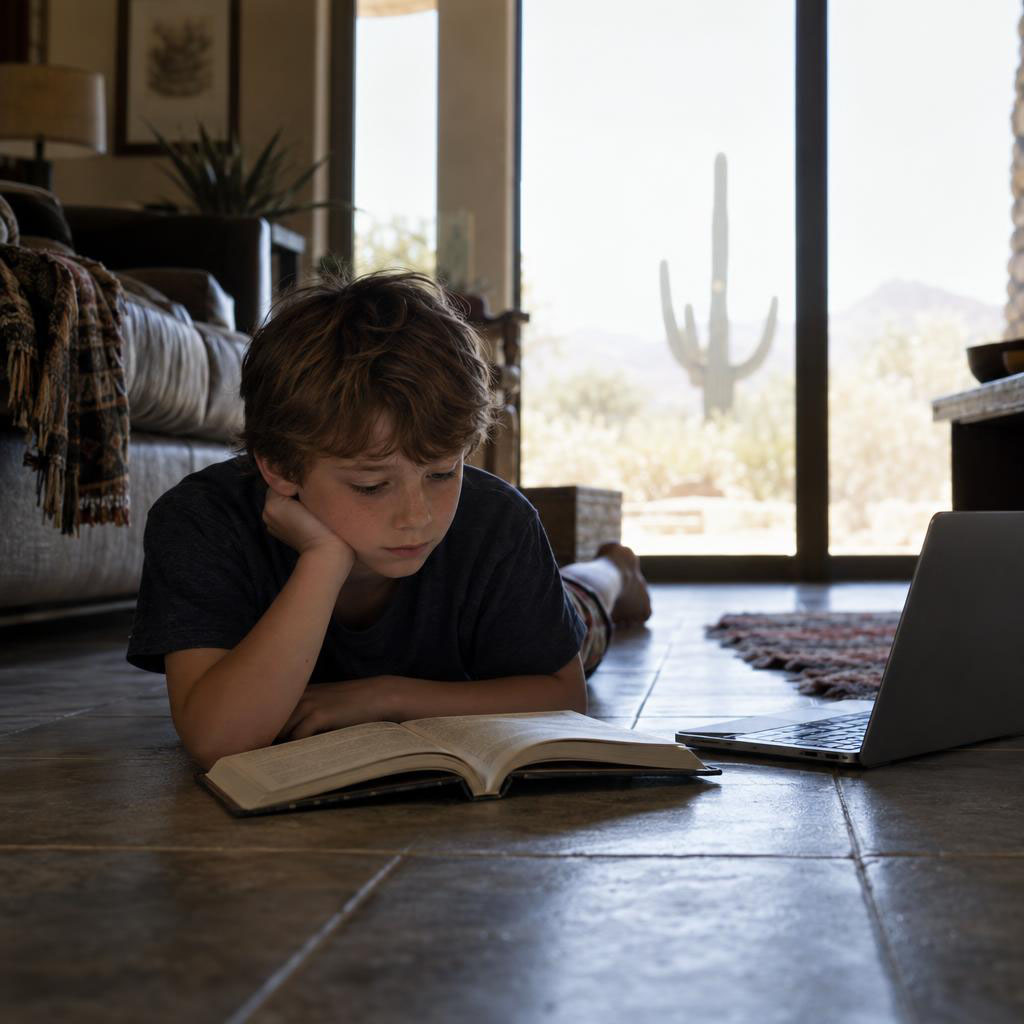
Online elementary school in Arizona: accredited options, how the universal ESA helps pay tuition, and what to look for when choosing a program for K-5.

An online elementary school curriculum covers reading, math, science, and social studies across grades K-5. Here's what students learn and how it's taught.
Learn what live online classes look like for K-12 students, how formats compare, why class size matters, and where to find a truly personalized option. Explore now.